FC

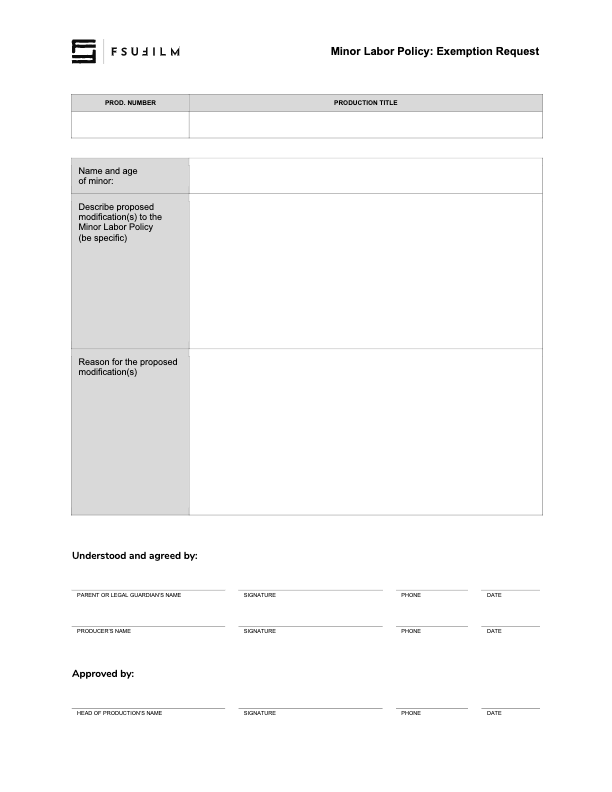
Minor Labor Policy Exemption Request

Overview

Productions seeking to work with minors must use this request process when asking for an exemption from the standard minor labor policy. The request allows the production to explain why the exemption is needed, secure consent from a parent or legal guardian, and provide the information necessary for review before the minor participates in production activity.

This process exists to protect minors from unsafe, excessive, or inappropriate working conditions while ensuring that productions comply with school and university expectations. Because working with children carries additional safety, scheduling, supervision, and legal responsibilities, exemptions must be reviewed carefully rather than assumed.

Instructions

The Minor Labor policy is intended to safeguard children from being employed under conditions that are injurious or detrimental to their health, safety or education.

The Producer of a show is required to work with the parent (or legal guardian) to complete a Minor Labor Policy Agreement, which outlines the conditions of employment. On occasion, however, there can be instances where an aspect of this agreement may be waived or modified, and the Producer may submit this exemption request to the Head of Production. All exemptions must have the consent of the parent or legal guardian, and final approval of requests lies solely with the Head of Production.
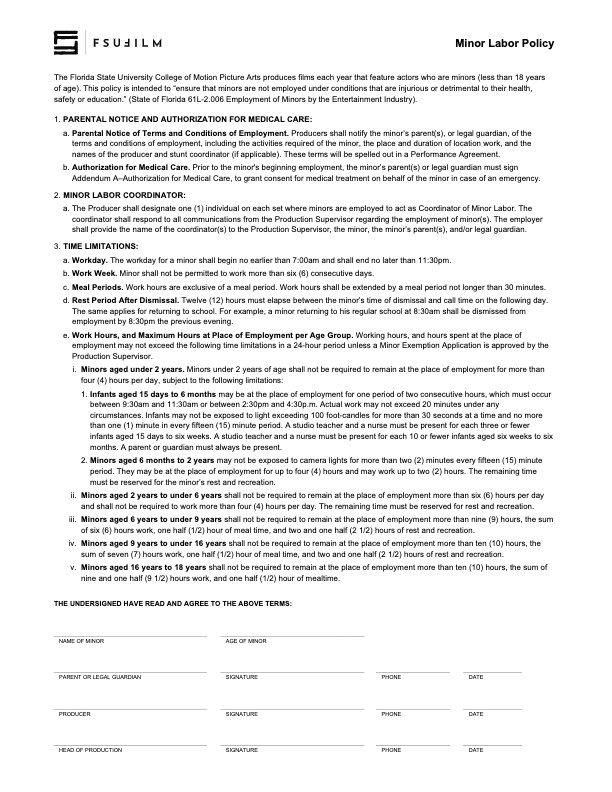
Minor Labor Policy Agreement

Overview

The Minor Labor Policy Agreement documents the expectations and conditions that apply when a production is approved to work with a minor. It establishes the responsibilities of the production, the student filmmakers, and the parent or guardian in relation to the minor’s participation.

This agreement is important because minors require additional safeguards around working hours, supervision, safety, transportation, and overall welfare. The form helps ensure that everyone involved understands the conditions of the minor’s participation before production begins.

Instructions

The Minor Labor policy is intended to safeguard children from being employed under conditions that are injurious or detrimental to their health, safety or education. This paperwork serves to ensure that parents (or legal guardians) are informed about the conditions of employment.

The Producer of a show that involves minor labor should complete both pages of this document with the parent or legal guardian. The first page outlines the terms of the labor agreement. The second page documents any medical conditions or dietary needs, and provides authorization for the school to seek medical treatment for the minor in cases of emergency.

Should any exemptions or modifications to this policy be needed, the Producer should complete a Minor Labor Policy Exemption Request with the parent or legal guardian.

Meal Sign In

Overview

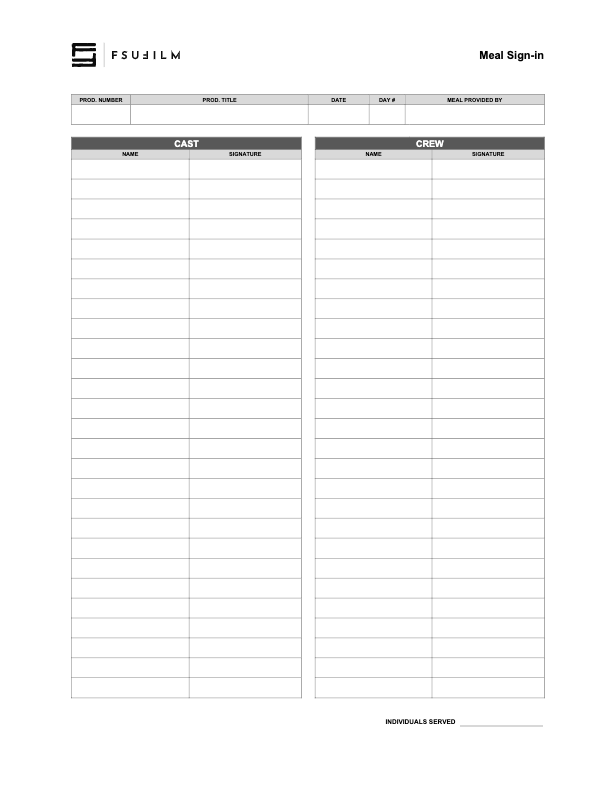
The Meal Sign In form is used to document meals provided during production. The Producer should prepare the form in advance with as much information as possible, and the 2nd AD typically manages sign-in during lunch on set.

Maintaining accurate meal records helps the production document that meals were provided and that cast and crew were accounted for during the workday. This supports both production organization and school oversight, while reinforcing the expectation that productions handle meal periods responsibly and consistently.

Instructions

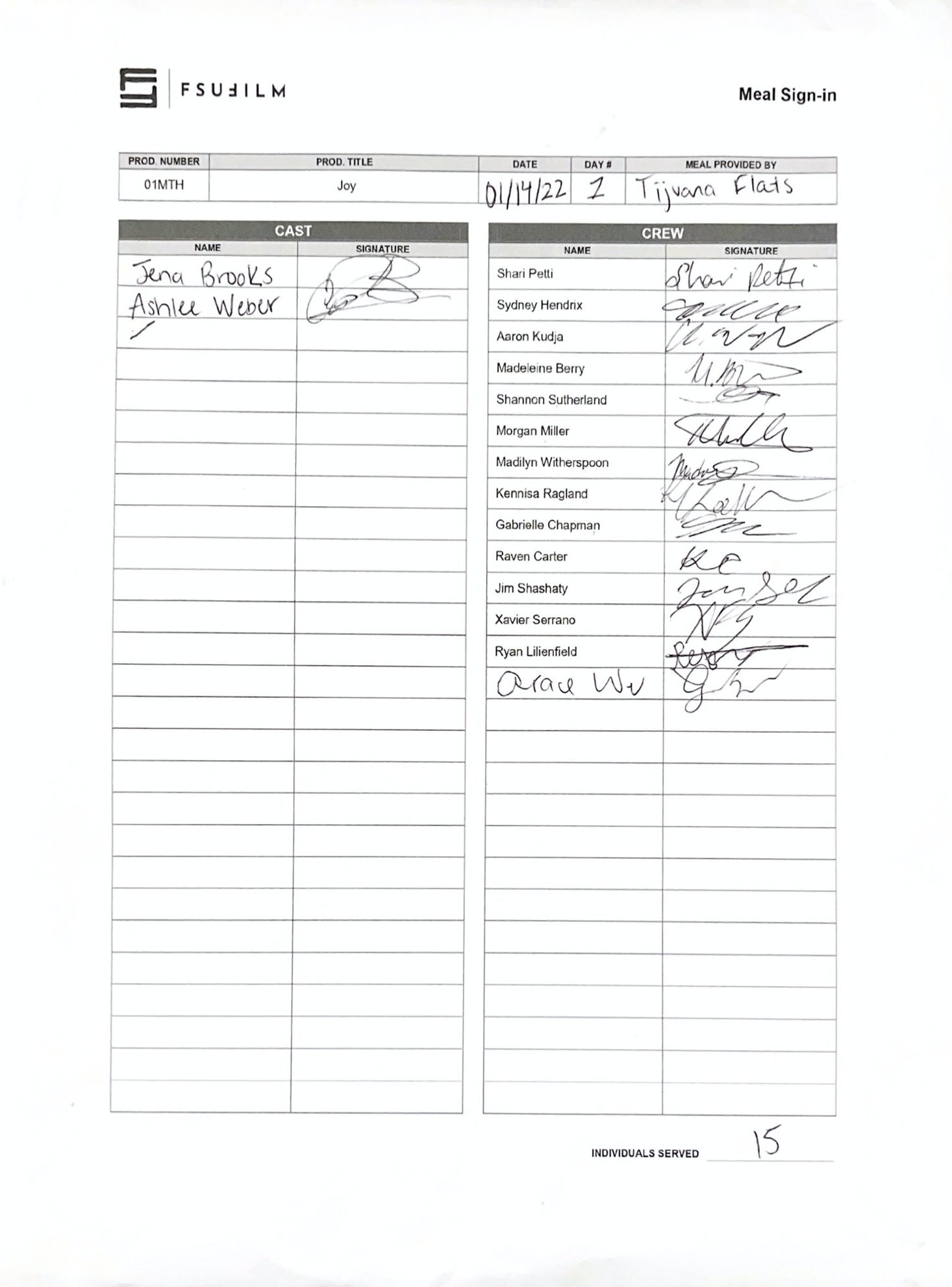
The Producer should prepare the Meal Sign In sheets prior to production by typing in as much info as possible. Then on set during lunch, the 2nd AD will have each Cast and Crew member sign the sheet. Count the number of signatures, and enter that number at the bottom by Individuals Served.

The Producer will also need to turn in the Meal Sign In sheets along with the Reimbursement Voucher to verify those who had eaten the food that was provided on set.

Sample

Here’s a sample of what the completed form should look like:

Sample of a completed form

Master Use License Request

Overview

A Master Use License Request is used when a production wants permission to use a specific existing sound recording in a film. This permission is cleared with the record label or other owner of the recording, and is separate from the synchronization license needed for the underlying musical composition.

This process is important because a recorded song usually involves multiple rights. Even if a production has permission to use the composition, it still needs permission to use a particular recording of that composition. Proper clearance helps ensure that the film can be exhibited and distributed without unresolved music rights issues.

INSTRUCTIONS

A master use license is the right to synchronize a sound recording with your visual image. You clear this right with the record label who owns the sound recording you would like to use.

Check the liner notes of the recording to find out which company this is. Alternatively, you can get contact information for record labels by contacting either ASCAP or BMI. You will be provided with a contact at the record label’s Business Affairs Department.

Getting the rights could be as simple as sending letters to the publisher and record label, having them sign and return them. However, you may be required to complete their licensing agreements instead. If this is the case, make sure you have the Head of Production review the agreement before you sign it, to ensure we have the proper releases.

You must get each license for at least:

  • Two-years
  • Film festival
  • Non-commercial
  • World rights

Note that if you do not plan to use the original sound recording, but rather plan to reproduce a specific musical composition in your film, you need to acquire a Synchronization License instead.

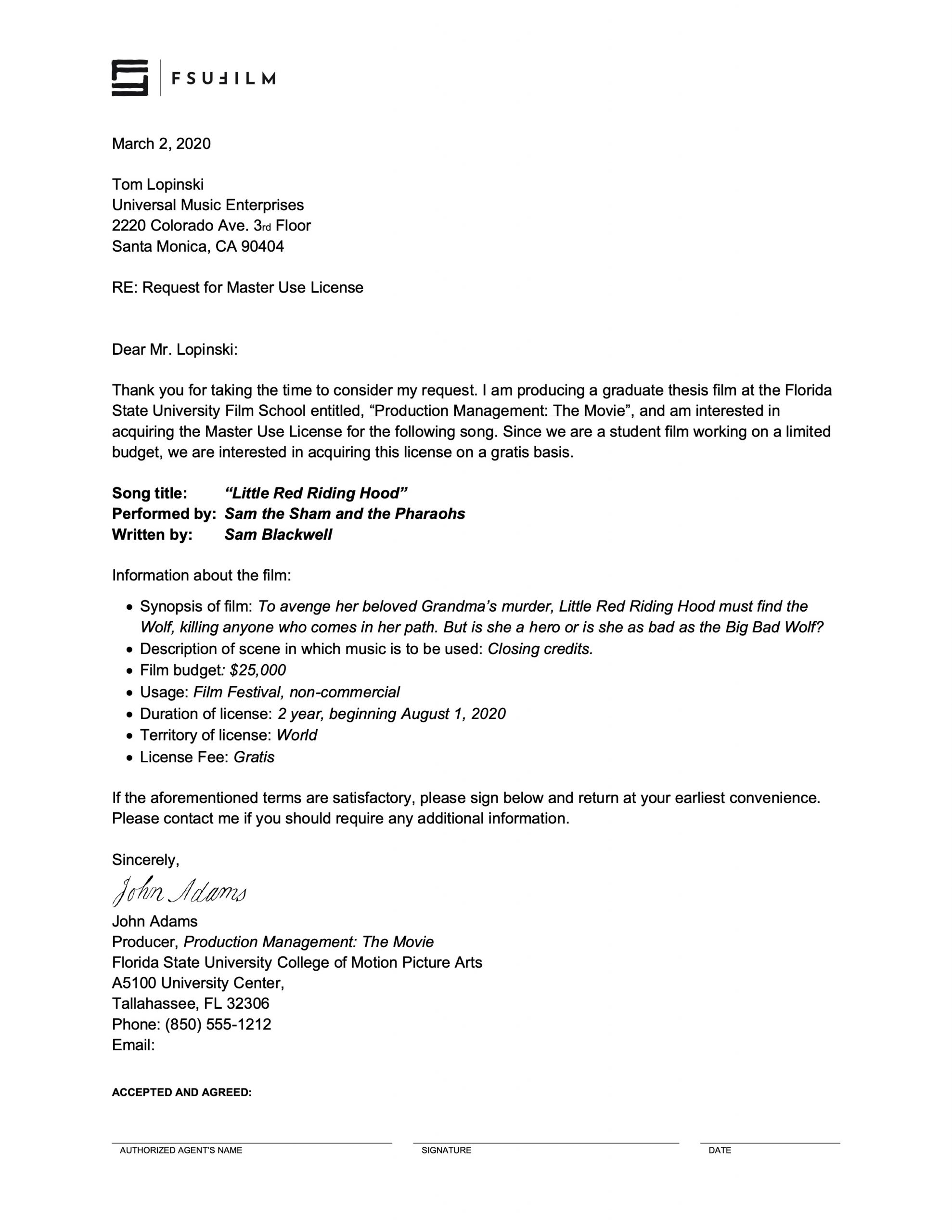
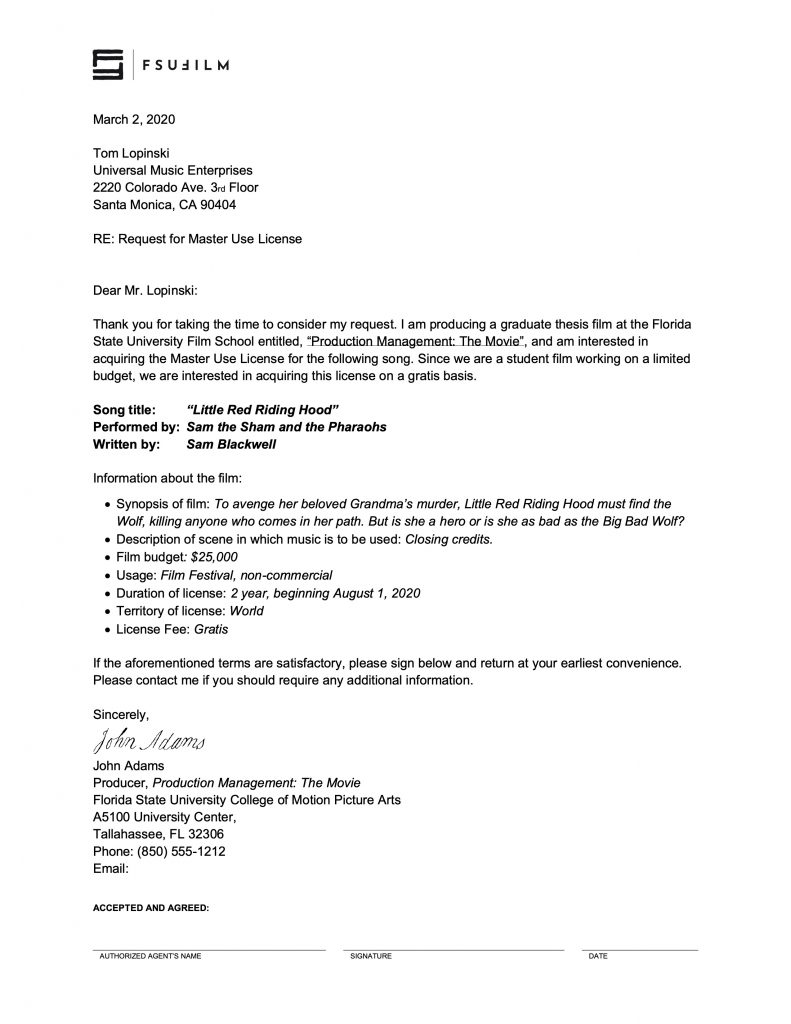
SAMPLE LETTER

Here’s a sample of what the letter should look like:

Sample letter

Location Shooting Plan Agreement

Overview

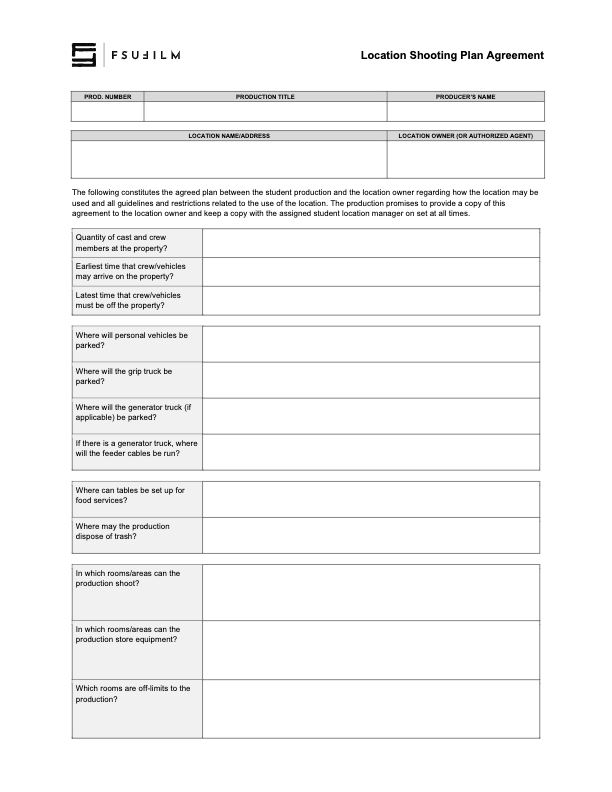
The Location Shooting Plan Agreement documents the specific guidelines, restrictions, and conditions governing how a production may use an approved location. It’s completed with input from the location owner and addresses the finer details of the shoot, including what activities may take place and what limitations the production must follow while on site.

This agreement helps protect the location owner, the production, and the school by making expectations clear before filming begins. Clear location rules reduce misunderstandings, support safer production planning, and help maintain positive relationships with property owners and community partners.

Instructions

In addition to completing a Location Agreement with the Location Owner (or authorized agent), the Producer must also complete a Location Shooting Plan Agreement. This agreement gets into the finer details of how the location may be used and all guidelines and restrictions related to the use of the location.

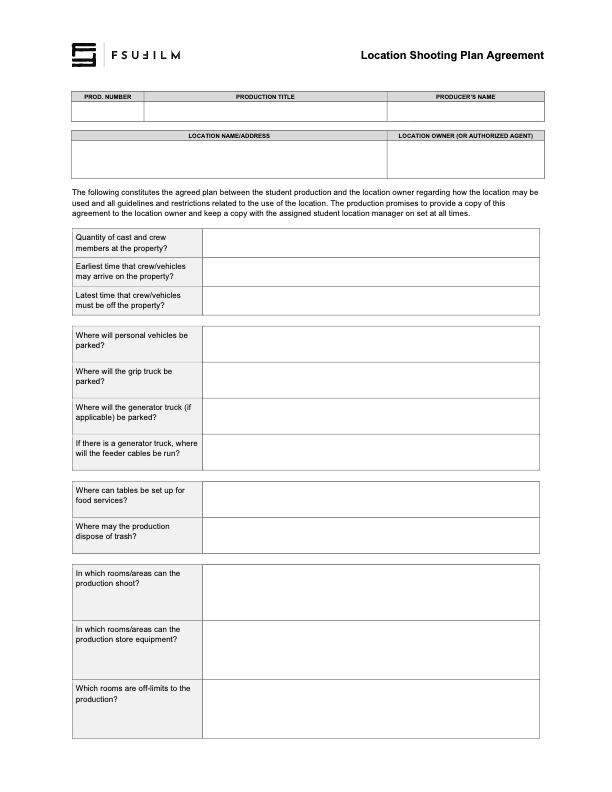
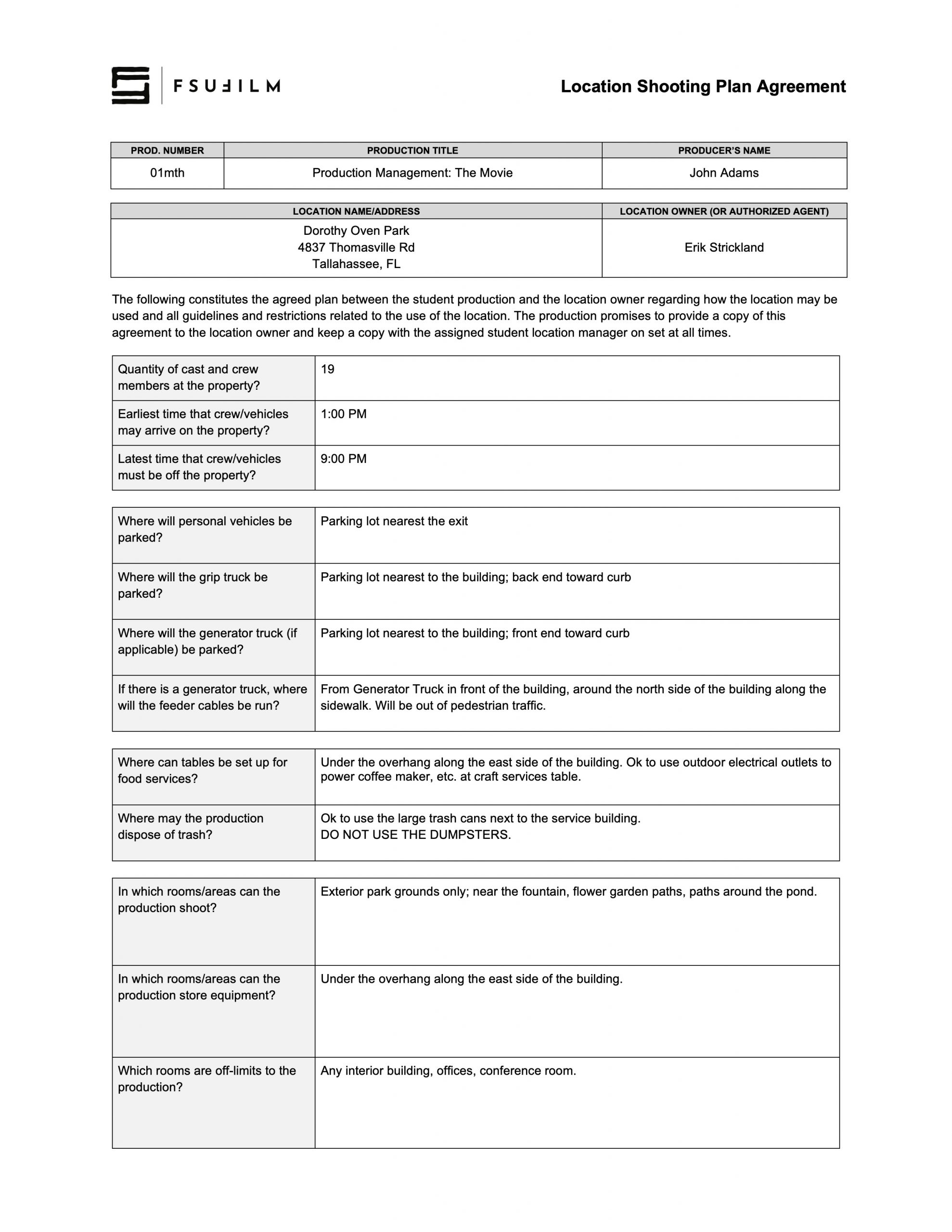
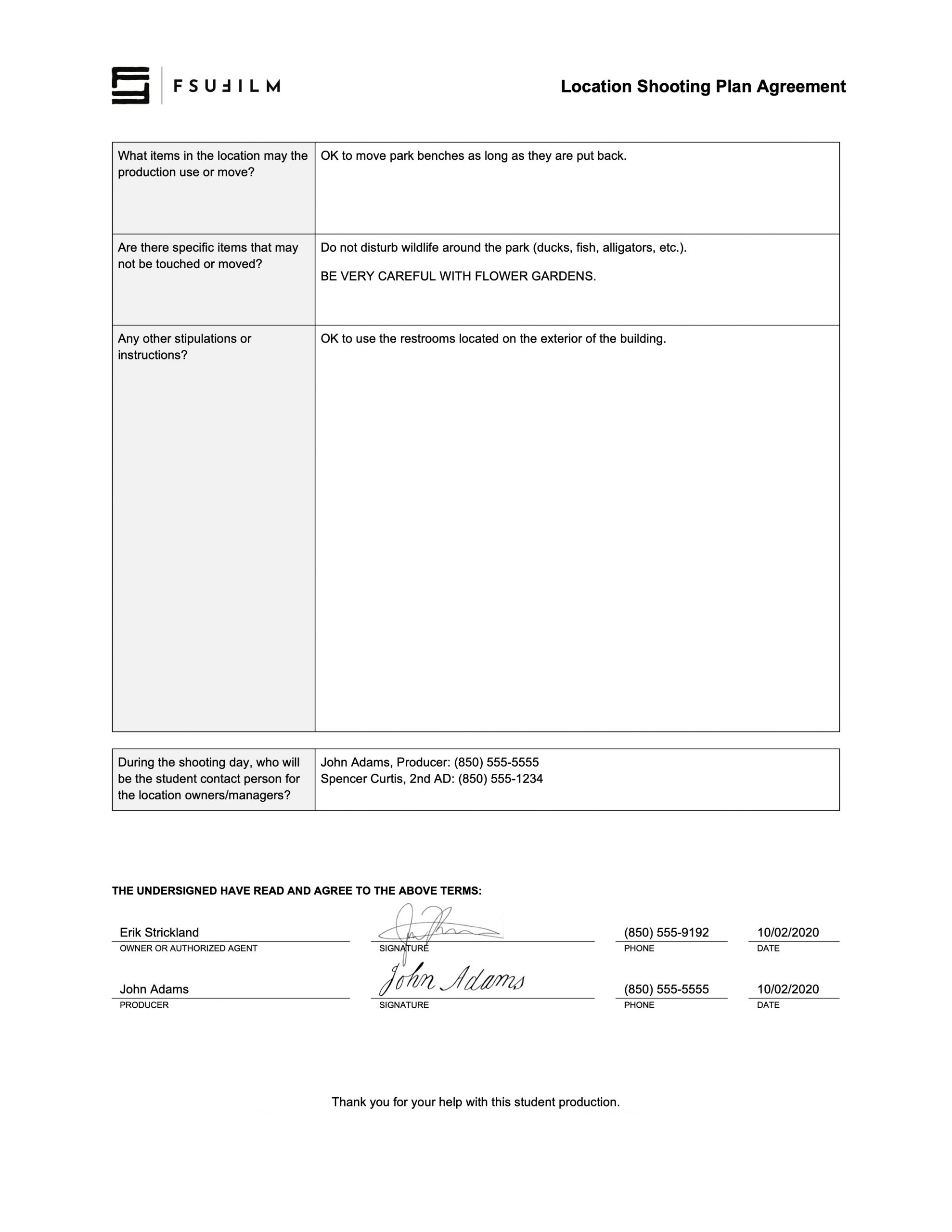
This includes information about: the quantity of crew members; arrival and departure times; parking; craft service; trash; which rooms can be used or not-used; which items can be moved or not-moved; any safety protocols the location may require; and the names/info of the students that location owners should contact during the shooting day.

Sample

Here’s a sample of what the completed form should look like:

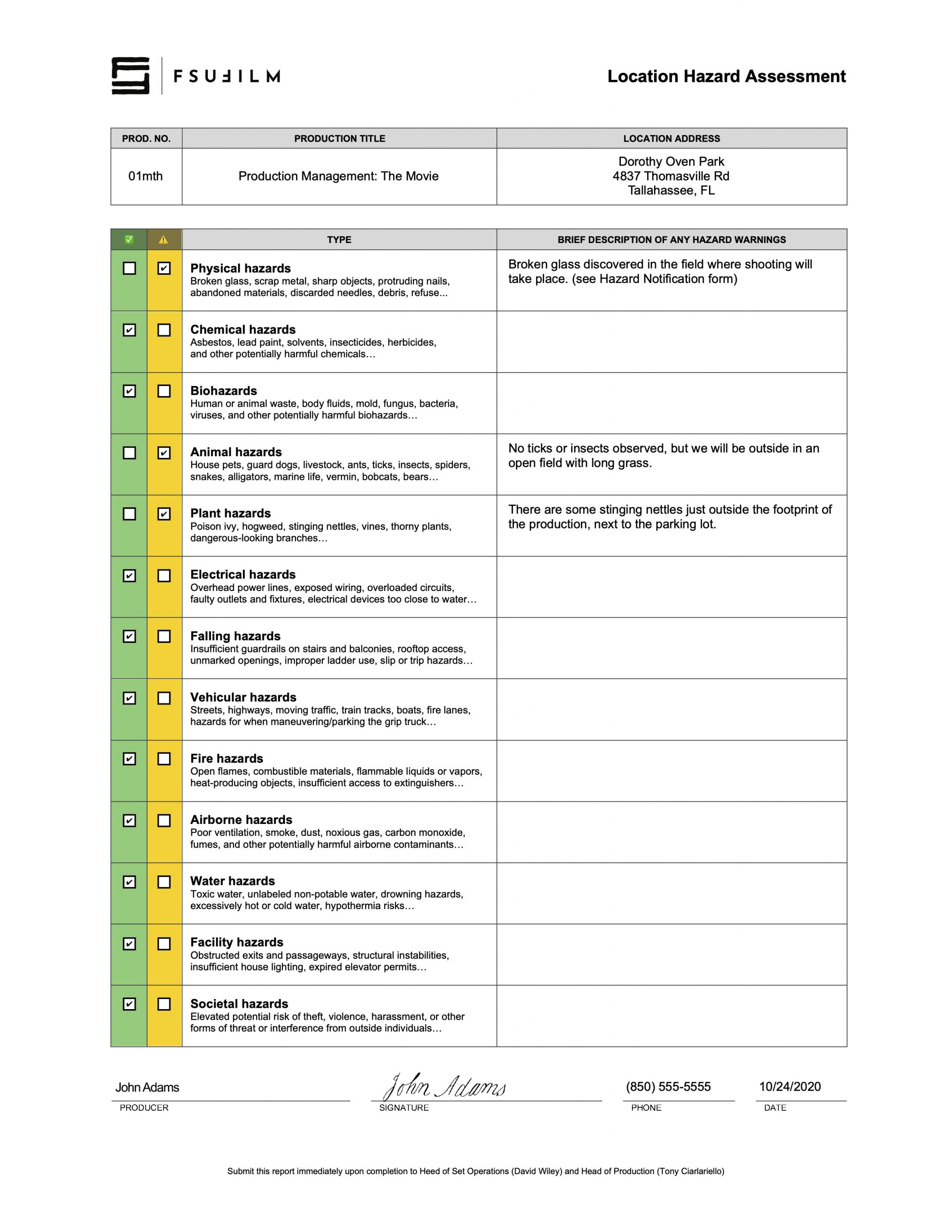
Location Hazard Assessment

Overview

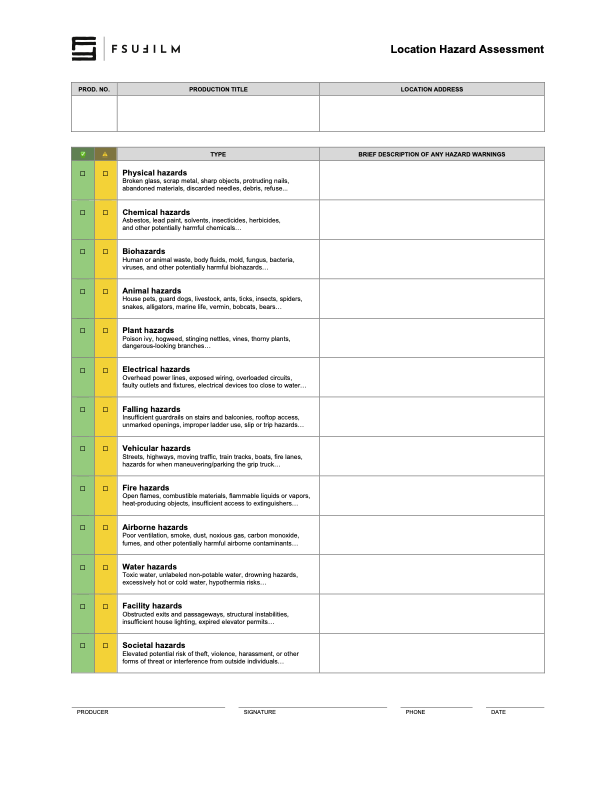
The Location Hazard Assessment checklist is used to identify potential risks at a filming location before production takes place. These may include physical hazards, chemical hazards, biohazards, animal or plant hazards, electrical hazards, fall risks, environmental concerns, or other conditions that could affect cast, crew, equipment, or the public.

This assessment is important because location risks are easiest to manage when they are identified early. Documenting hazards in advance allows the production and school to determine whether additional safety measures, approvals, adjustments, or alternate plans are needed before filming begins.

Instructions

The Producer is responsible for conducting a thorough inspection of every shooting location and completing a separate Location Hazard Assessment form for each site. This form should be completed before the project’s tech scout or director’s prep so that any identified risks can be reviewed with faculty in advance.

When completing the form, be specific and practical. The goal is not simply to identify hazards, but to document how the production might mitigate or manage them. If a hazard is present, clearly describe the precautions the production could take to reduce risk.

Hazards may include:

  • Physical hazards
  • Chemical hazards
  • Biohazards
  • Animal hazards
  • Plant hazards
  • Electrical hazards
  • Falling hazards
  • Vehicular hazards
  • Fire hazards
  • Airborne hazards
  • Water hazards
  • Facility hazards
  • Societal hazards

The assessment should reflect the actual conditions of the location at the time of scouting. Productions should revisit and update assessments if conditions significantly change prior to filming.

Sample

Here’s a sample version of what the completed form should look like:

Sample form

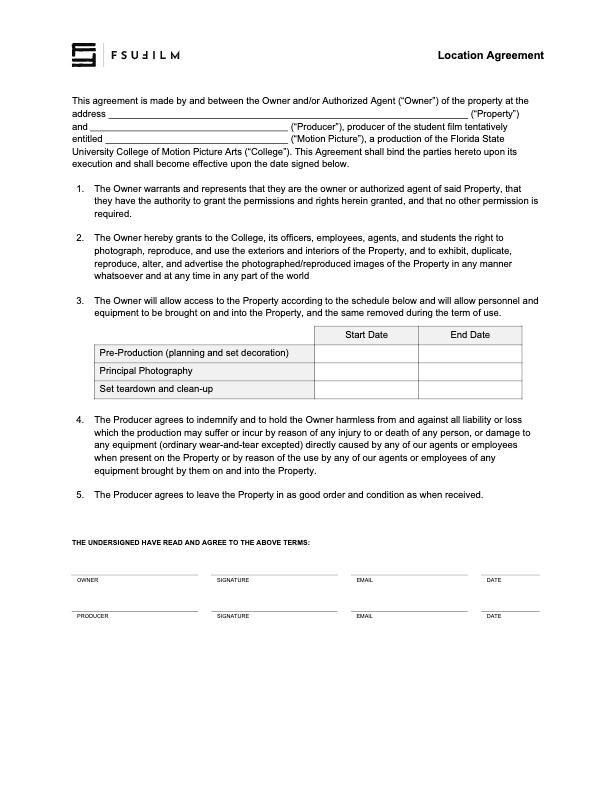
Location Agreement

Overview

The Location Agreement is used with a location owner or authorized agent to secure permission for a production to use and photograph a property. It establishes the production’s right to film at the location and documents the basic terms of that access.

This agreement is essential because productions cannot assume permission to film on private or controlled property. Written approval protects the production, the school, and the property owner by clarifying access, usage rights, and the conditions under which the location may appear in the finished film.

Instructions

The Producer should use this contract agreement with the Location Owner (or authorized agent), in order to have the right to use and photograph the interiors and exteriors of the property.

The Producer is responsible for working with the Location Owner to determine the start and end dates for when the show will have access to the location. (The Producer is additionally responsible for drafting a Location Shooting Plan Agreement with the Location Owner.)

All other clauses in the agreement must remain unchanged, unless the Producer is authorized in advance by the Head of Production to make specific amendments to the contract.

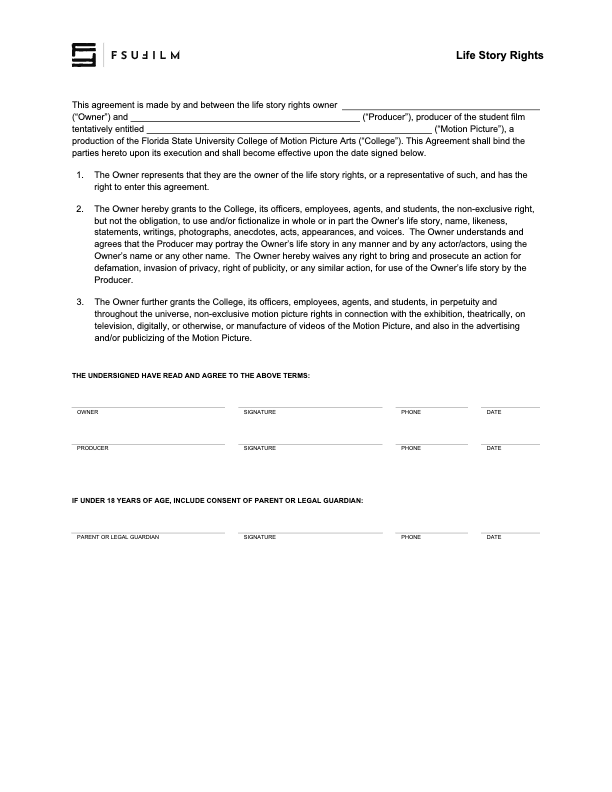
Life Story Rights

Overview

The Life Story Rights agreement is used when a production wants to use or fictionalize a person’s life story, name, likeness, statements, writings, photographs, anecdotes, acts, appearances, or voice. The Producer works with the owner of those rights to secure permission through the approved agreement.

This agreement is important because stories based on real people can involve significant personal, legal, and ethical considerations. Proper documentation helps ensure that the production has permission to use the material and that any changes to the agreement are approved in advance by the Head of Production.
Instructions

The Producer should use this contract agreement with the Owner of the life story rights, in order to use and/or fictionalize the Owner’s life story, name, likeness, statements, writings, photographs, anecdotes, acts, appearances, and voices.

All clauses in the agreement must remain unchanged, unless the Producer is authorized in advance by the Head of Production to make specific amendments to the contract.

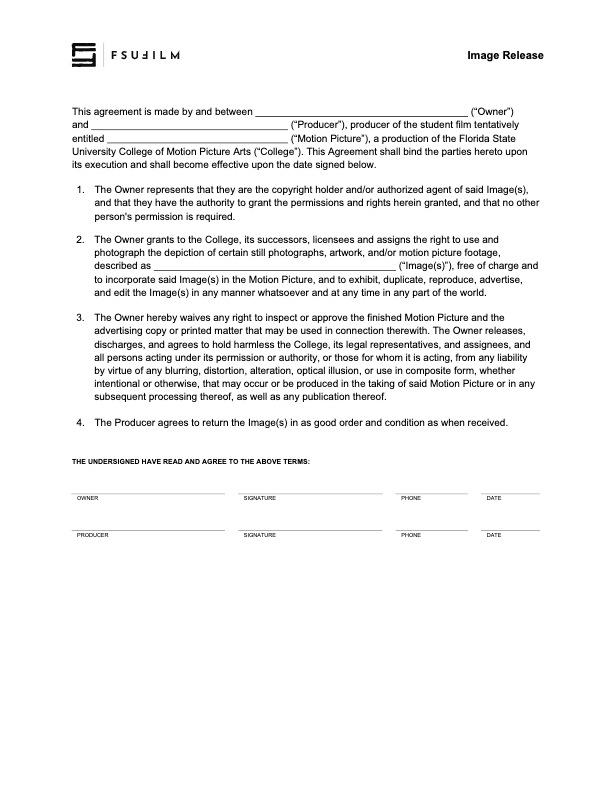
Image Release

Overview

The Image Release is used when a production wants permission to use or photograph a still image, artwork, graphic, or other copyrighted visual material in a film. The Producer secures the release from the copyright holder or authorized agent.

This form is important because images found online, in books, in archives, or in personal collections are not automatically available for use in student films. Proper releases help productions avoid rights issues during delivery, festival submission, online exhibition, or future distribution.

Instructions

The Producer should use this contract agreement with the copyright holder (or authorized agent) for the right to use and photograph the depiction of still photographs, artwork, and/or motion picture footage.

All clauses in the agreement must remain unchanged, unless the Producer is authorized in advance by the Head of Production to make specific amendments to the contract.

Hazard Notification

Overview

The Hazard Notification form may be used by any crew member who has a concern about a potential hazard during production. The form allows the crew member to describe the hazard and identify any steps they believe may be needed to address it.

This process is important because safety responsibility does not belong only to producers, department heads, and shop stewards. Giving any crew member a clear way to report hazards helps productions identify risks earlier, respond more responsibly, and reinforce a culture where safety concerns are taken seriously.

Instructions

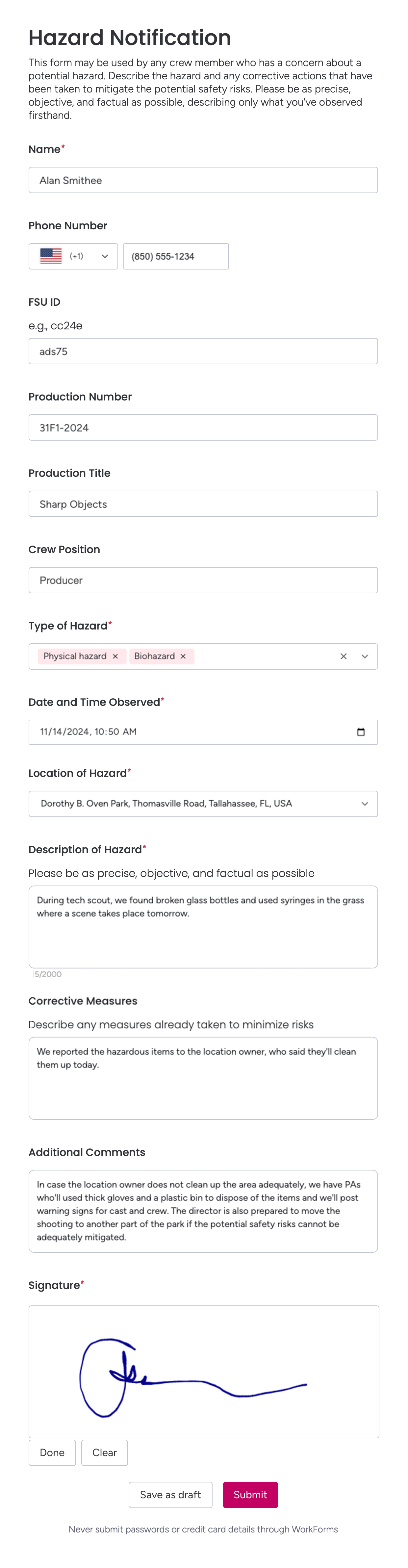
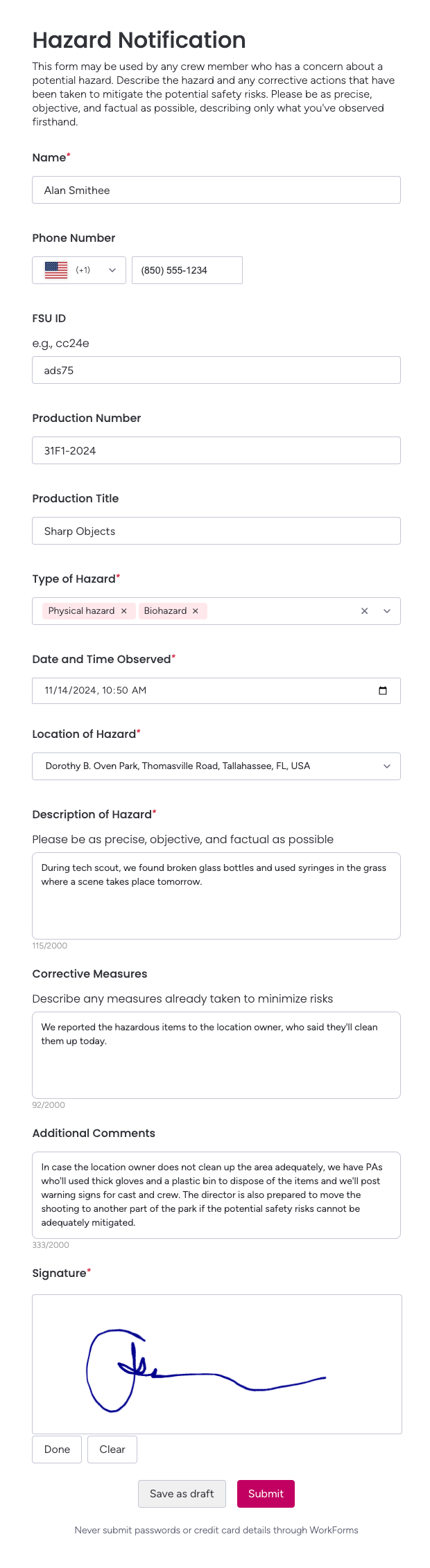
The Hazard Notification form may be used by any crew member who has a concern about a potential hazard. Use the form to describe the hazard and to describe any corrective actions that have been taken (or could be taken). Please be as precise, objective, and factual as possible, describing only what you’ve observed first-hand.

Sample Form

Here’s a sample of what the completed form should look like:

Sample form