#paperwork

Safety Meeting Report

Overview

The safety meeting report documents the safety discussions, procedures, identified risks, and production-specific concerns reviewed with cast and crew before filming activities take place.

Formal safety documentation is important because film productions often involve physical activity, equipment, environmental hazards, transportation, and other situations that require clear communication and shared awareness among the crew. Maintaining written safety records helps reinforce accountability, supports safer production practices, and encourages students to approach production planning with a stronger understanding of risk management and on-set responsibility.

INSTRUCTIONS

The Safety Meeting Report is to be completed by a Shop Steward to document what was covered in the morning safety meeting. It can also be used by the Assistant Director as a cheat sheet for what needs to be addressed in the meeting.

SAMPLE

Here’s a sample of what the completed report should look like:

Sample of a completed form

Reimbursement Voucher

Overview

A reimbursement voucher is used when a student or production seeks repayment for approved out-of-pocket expenses made on behalf of a production or related project activity. This process typically requires documentation such as receipts, purchase records, and supporting information verifying that the expense complied with approved production or university guidelines.

Because university funds and production budgets require careful financial oversight, reimbursement requests must be documented accurately and submitted according to established procedures. Maintaining organized reimbursement records helps ensure accountability, supports accurate financial tracking, and reinforces professional habits related to production expense management.
Instructions

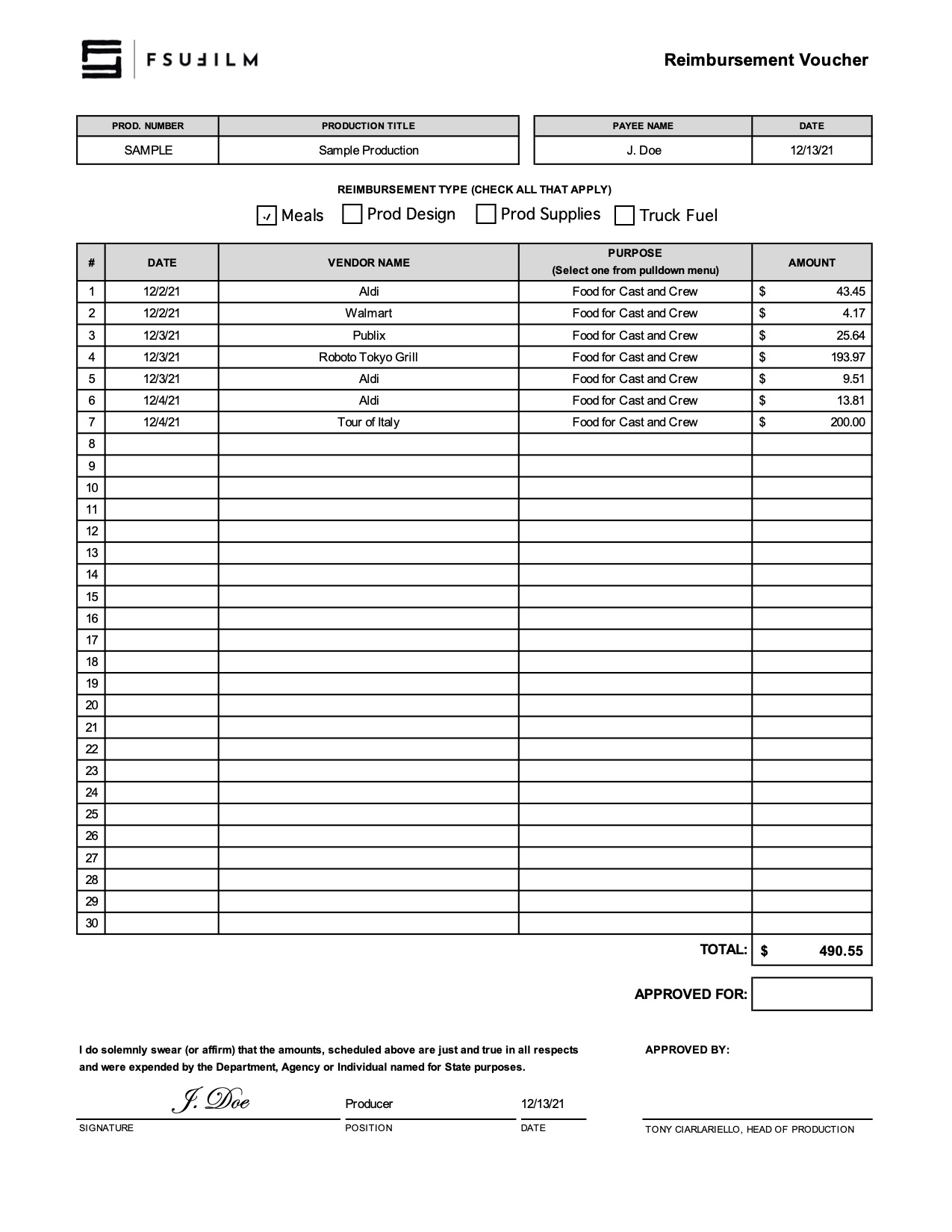
Students should submit this log to the Film School Accountant for reimbursements for meals, production design, production supplies, and/or truck fuel that were used on a production.

FSU does not allow for film school funds to be used on tips. Therefore, make sure you only list the subtotal BEFORE any tip amount is added.

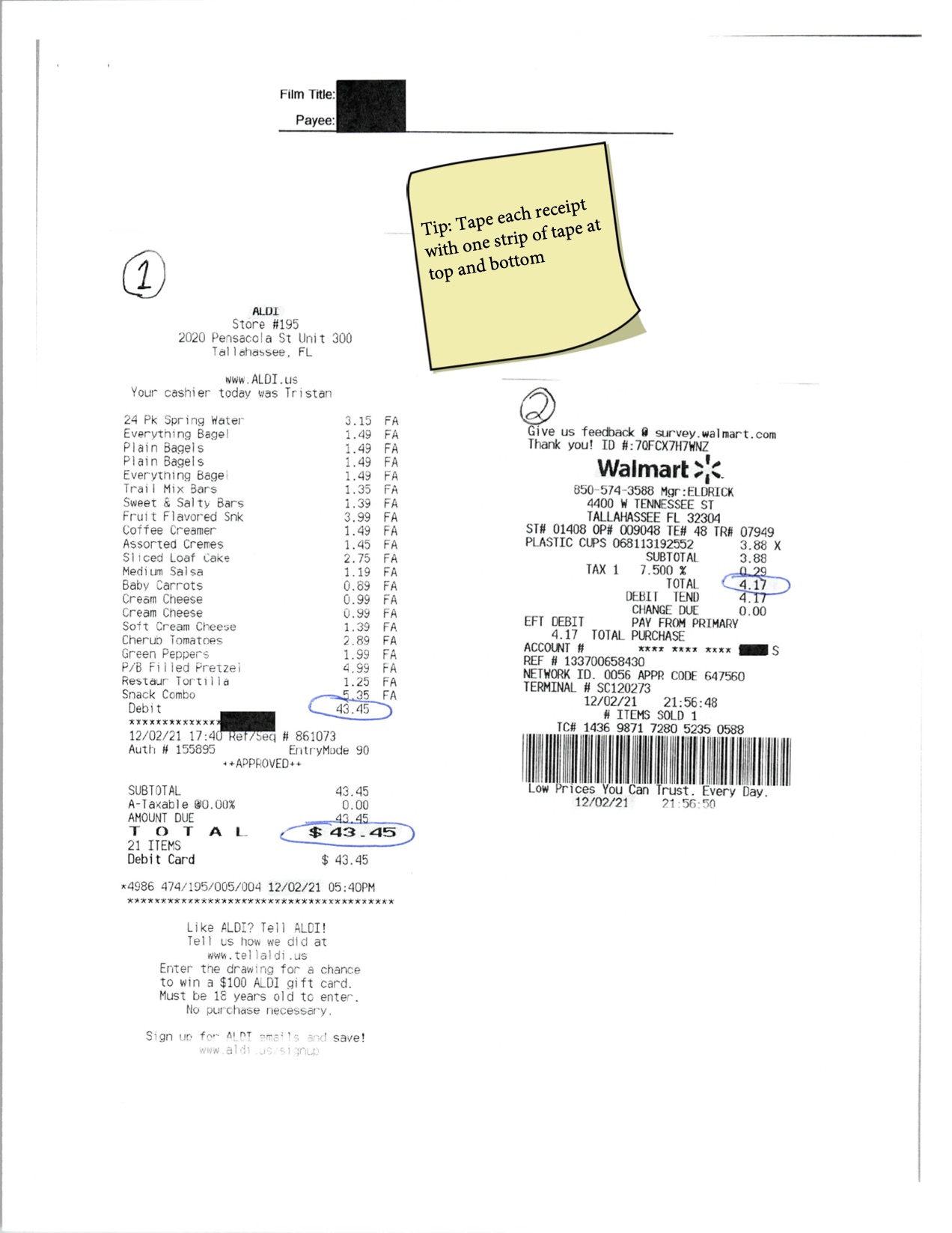
Tape receipts on supplemental sheets, ensuring that each receipt is taped at both the top and the bottom edge of the receipt.

Sample

Here’s a sample of what the completed form should look like:
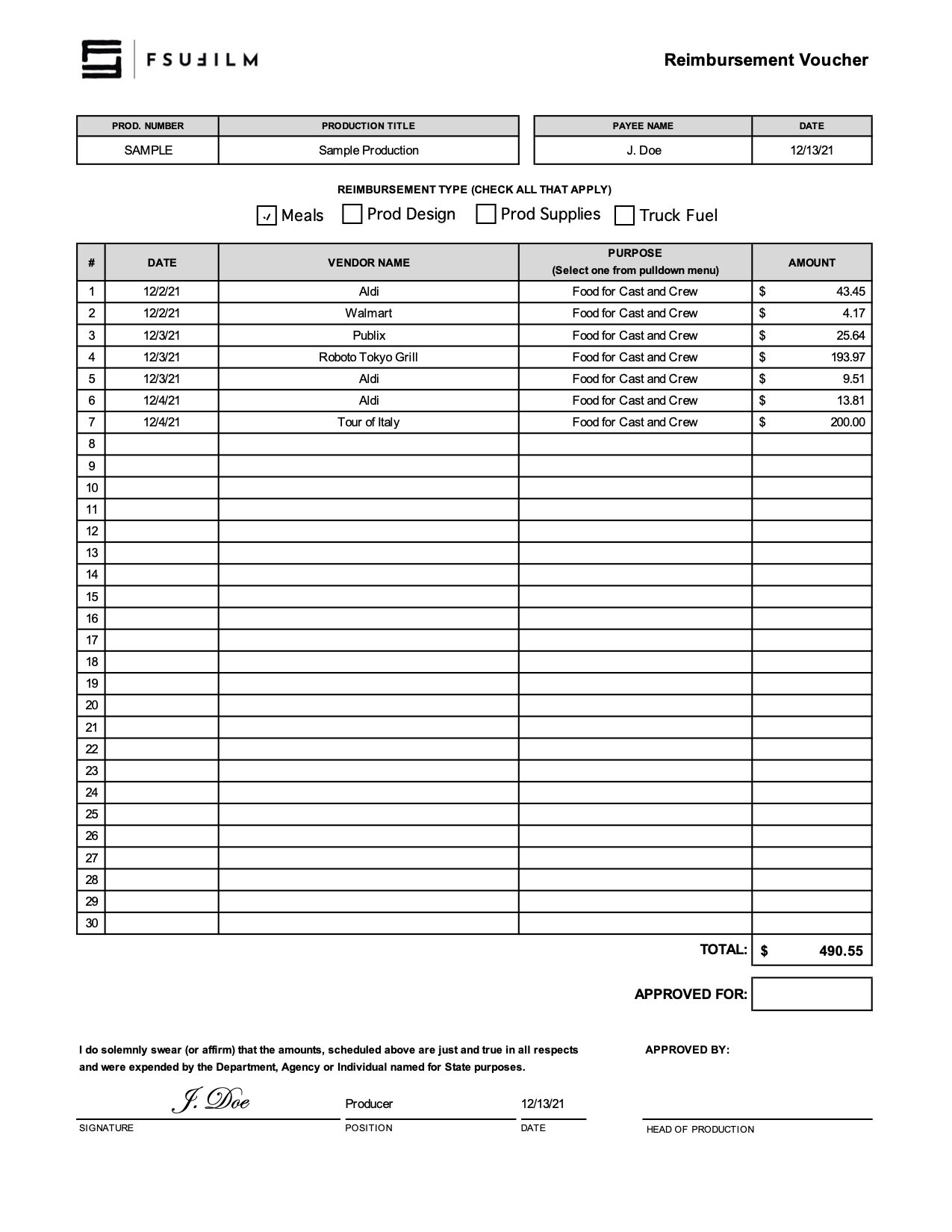
Sample of a completed form
Sample sheet of receipts

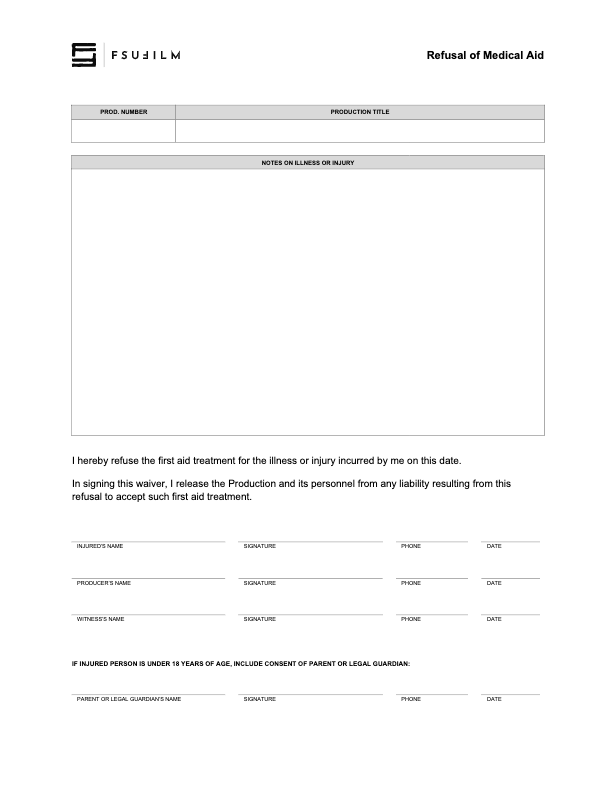
Refusal of Medical Aid

Overview

The Refusal of Medical Aid form documents situations in which an individual involved in a production declines medical assistance after an incident, injury, or safety-related event occurring during production activity.

Proper documentation of medical incidents is important because productions have a responsibility to maintain clear records related to on-set safety, injuries, and incident response. Recording a refusal of medical aid helps establish accurate documentation of the situation while reinforcing the importance of communication, accountability, and safety procedures within production environments.

Instructions

If a person is injured or experiences a medical emergency during the workday, the standard procedure to prioritize getting the person medical attention. There are circumstances, however, where an individual may choose to not get medical aid.

This form should only be used after an injury, illness, or medical incident in which an individual declines first aid, medical treatment, or transport after assistance has been offered. The form exists to document that the individual voluntarily refused care and understood the risks associated with that decision.

The form should be completed as soon as possible following the incident. Producers or set safety personnel should ensure that all sections are filled out clearly and accurately, including:

  • the date and location of the incident;
  • the nature of the illness or injury;
  • the medical aid or treatment that was offered;
  • the reason the individual declined assistance, if provided.

The injured or ill individual should personally complete and sign the form whenever feasible. A witness should also sign the form.

Signing the form documents that care was declined at the time of the incident and that the individual has released the production from any liability resulting from the refusal of medical aid. Signing the form does not prevent the individual from later seeking medical care.

This form should be retained with the production’s safety paperwork and incident documentation. If the situation appears serious or life-threatening, students should immediately contact emergency services and notify faculty, even if the individual initially refuses assistance.

Production Travel Agreement

Overview

The production travel agreement outlines the expectations, approval procedures, and reimbursement policies associated with travel conducted for production-related purposes. This is used when travelers are expected to pay for eligible travel expenses upfront and then submit the appropriate documentation for reimbursement afterward.

Because production travel involves university funding, liability, scheduling, and financial oversight considerations, expenses must be documented carefully and follow established procedures. The agreement helps ensure that travel is approved in advance, expenses remain compliant with university policies, and reimbursement requests can be processed accurately and efficiently.

Instructions

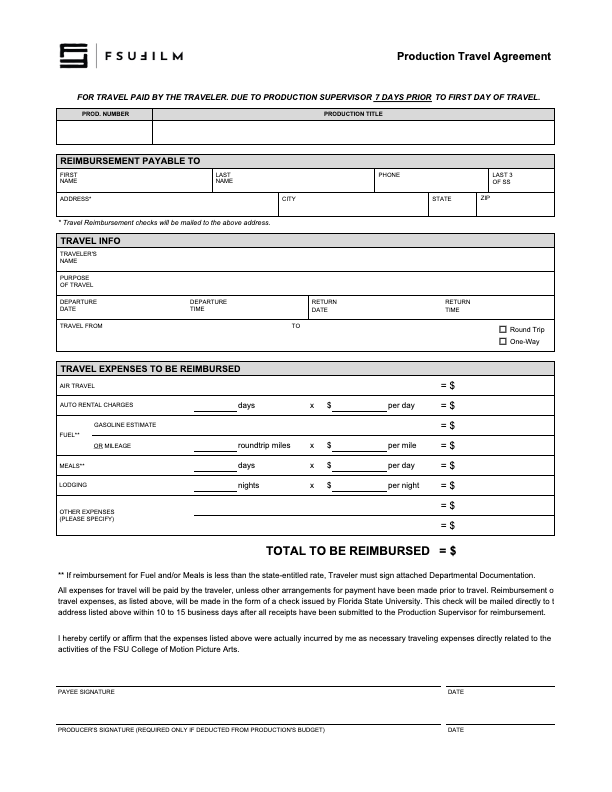
This agreement is for production travel expenses to be paid for by the traveler and then reimbursed. The Producer of the production should assist the traveler with the completion of the form and ensure it is submitted to the Head of Production (or a designated delegate) at least seven days prior to the first day of travel.

Reimbursed travel expenses will be made in the form of a check issued by Florida State University. The check will be mailed directly to the payee within 15 days of all receipts being submitted to the Head of Production (or a designated delegate).

Sample

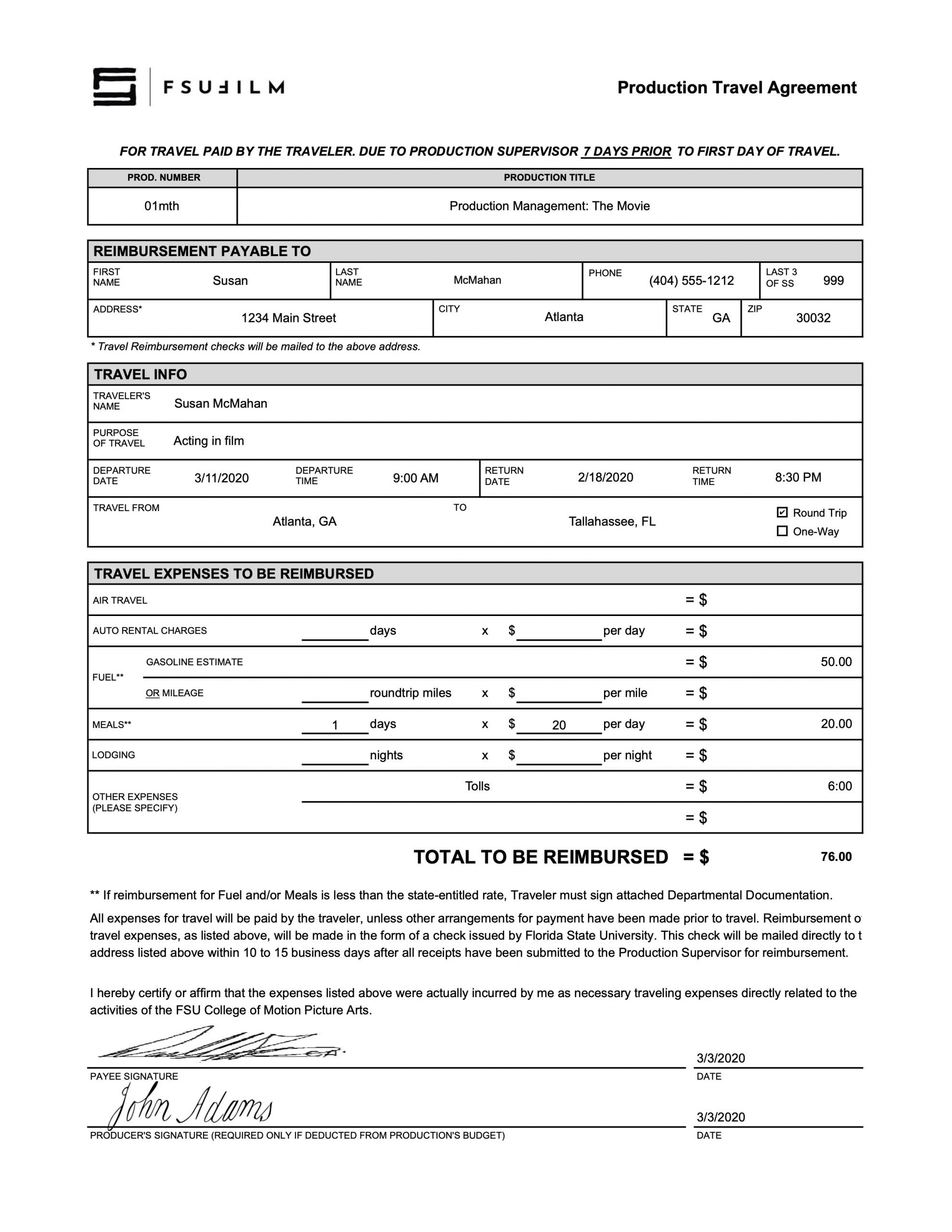
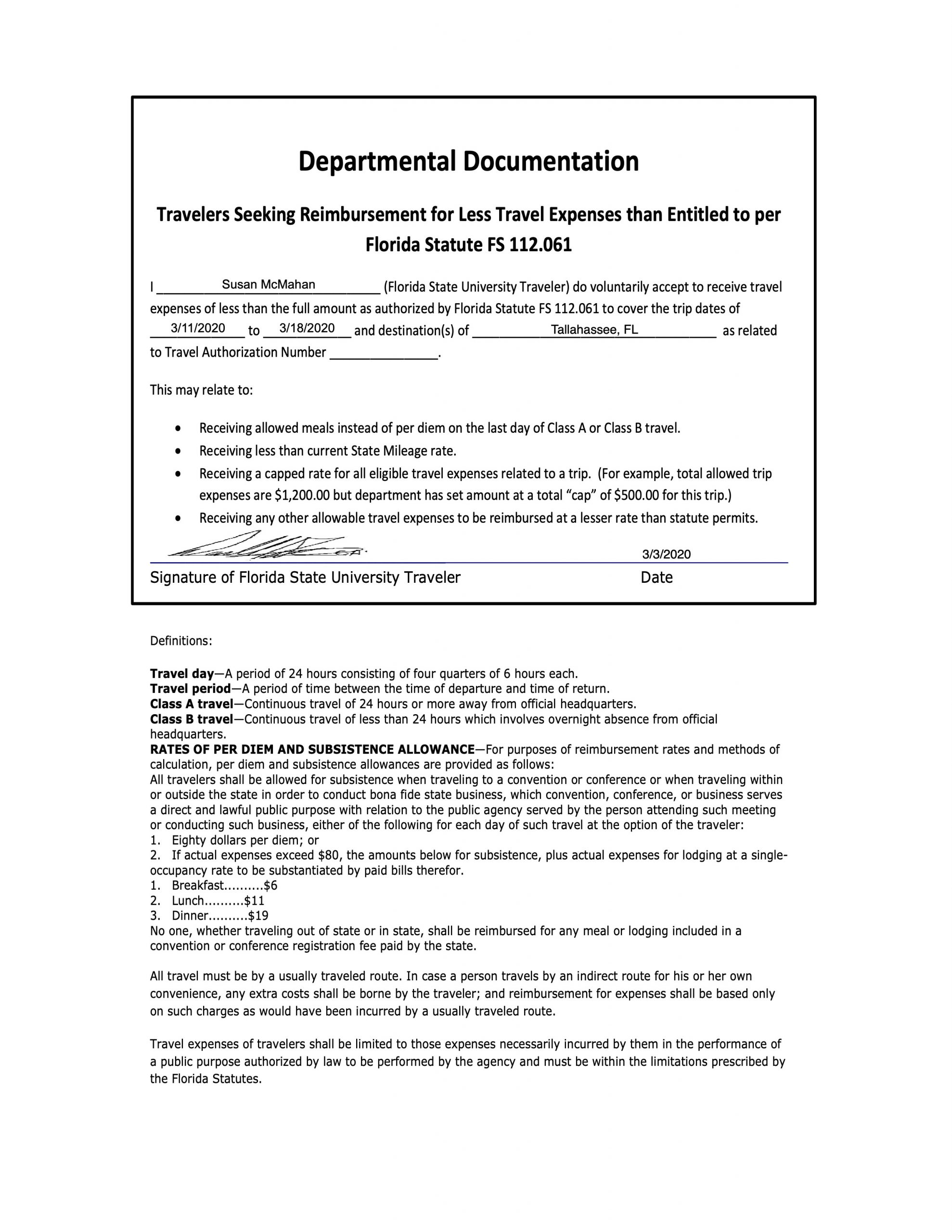
Here’s a sample of what the completed form should look like:
Sample of a completed form (page one)
Sample of a completed form (page two)

Picture Vehicle Agreement

Overview

A picture vehicle agreement documents permission and terms related to the use of a privately owned or externally provided vehicle appearing within a production as an on-camera element.

Because vehicles used on camera can involve liability, insurance, scheduling, and property-use considerations, productions must clearly document the terms under which the vehicle is being used. Proper agreements help protect both the production and the vehicle owner while reinforcing professional practices related to permissions, risk management, and production documentation.

Instructions

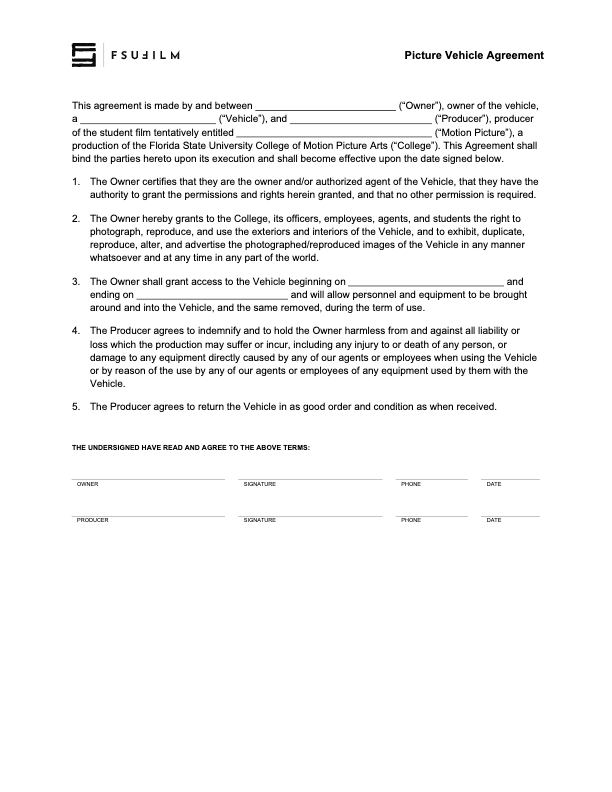
The Producer should use this contract agreement with the Owner of a vehicle that will be used as a picture vehicle in a production.

The Producer is responsible for working with the Owner to determine the dates the vehicle will be used.

All other clauses in the agreement must remain unchanged, unless the Producer is authorized in advance by the Head of Production to make specific amendments to the contract.

Disbursement Advance Request

Overview

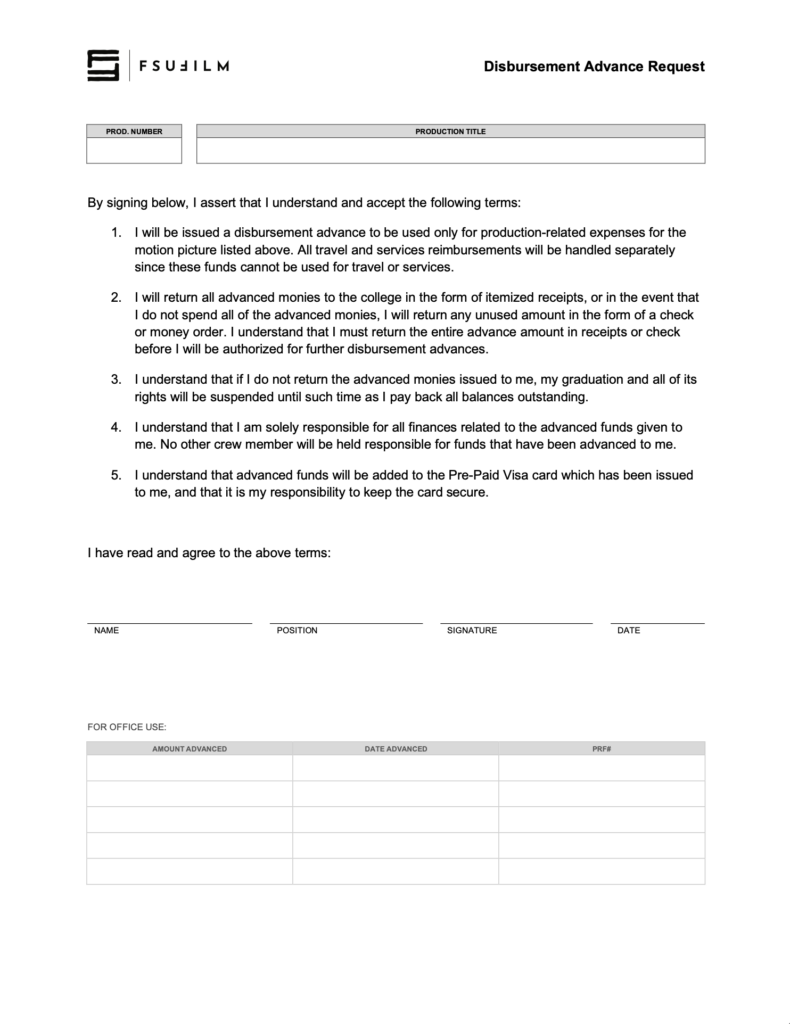
A disbursement advance request is used when productions seek access to approved funds in advance of anticipated production expenses, purchases, or operational needs.

Advance funding requests require careful oversight because productions must be able to document how institutional or production funds are being used and tracked throughout the production process. Establishing clear advance procedures helps maintain financial accountability, reduce confusion surrounding expenditures, and support more organized production budgeting workflows.

Instructions

This form should be used in instances where a student is issued a disbursement advance for production-related expenses on a production. Advances will be issued to the student’s pre-paid Visa card.

Students are required to submit itemized receipts for all expenses and to return any unused monies.

Performers Time Report

Overview

A performers time report documents the hours, dates, and participation details associated with performers working on a production. These records help track performer involvement throughout production activities and maintain organized documentation related to scheduling and production participation.

Accurate time reporting is important because productions depend heavily on reliable scheduling, coordination, and record-keeping across cast and crew activity. Maintaining organized performer records also supports professional production management practices and helps ensure that participation details are documented consistently throughout the course of production.

Instructions

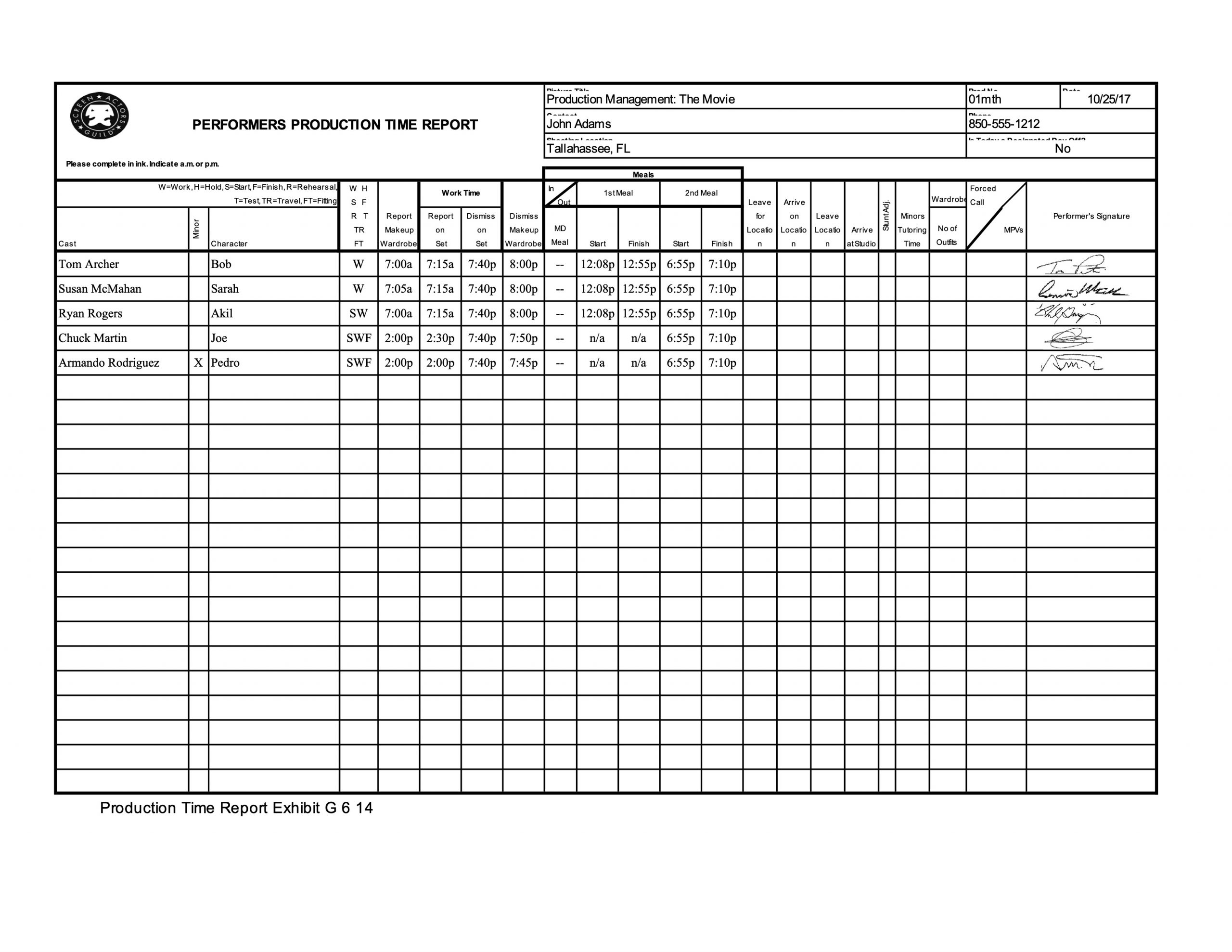
The 2nd AD should complete the Performers Time Report for each production day, ensuring that each performer signs the report before they are dismissed for the day. If a show does not have an assigned 2nd AD, the Producer shall assume the responsibility.

Sample

Here’s a sample of what the completed form should look like:
Sample of a completed form

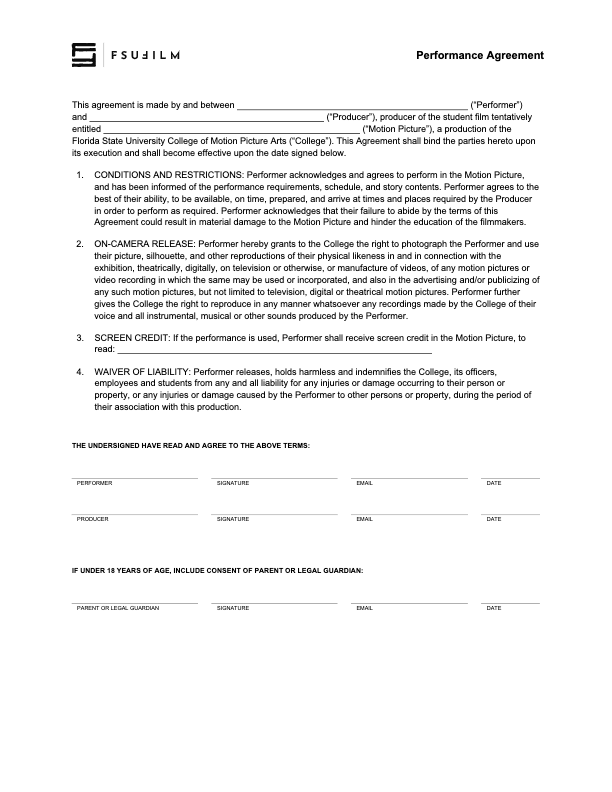
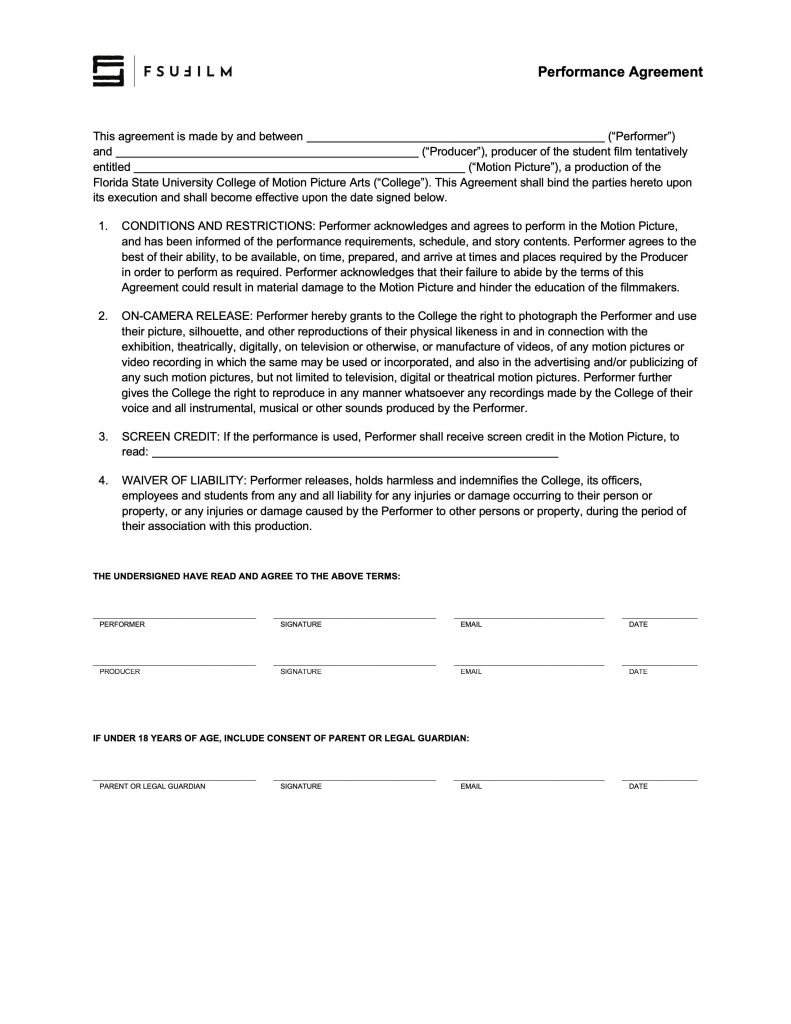
Performance Agreement

Overview

A performance agreement establishes the terms under which an actor or performer participates in a production, including permissions related to recording, usage of the performance, and the production’s right to exhibit and distribute the completed project.

Clear performer agreements are essential because productions must secure documented permission to use recorded performances within films intended for exhibition, festivals, online distribution, or archival purposes. Proper agreements help protect both the production and the performer while reinforcing professional standards related to contracts, releases, and production legal workflows.

Instructions

The Producer should use this contract agreement with a Performer, in order to have the right to record their voice and likeness for the film.

The Producer is responsible for working with Performer to determine the screen credit in the finished film.

All other clauses in the agreement must remain unchanged, unless the Producer is authorized in advance by the Head of Production to make specific amendments to the contract.

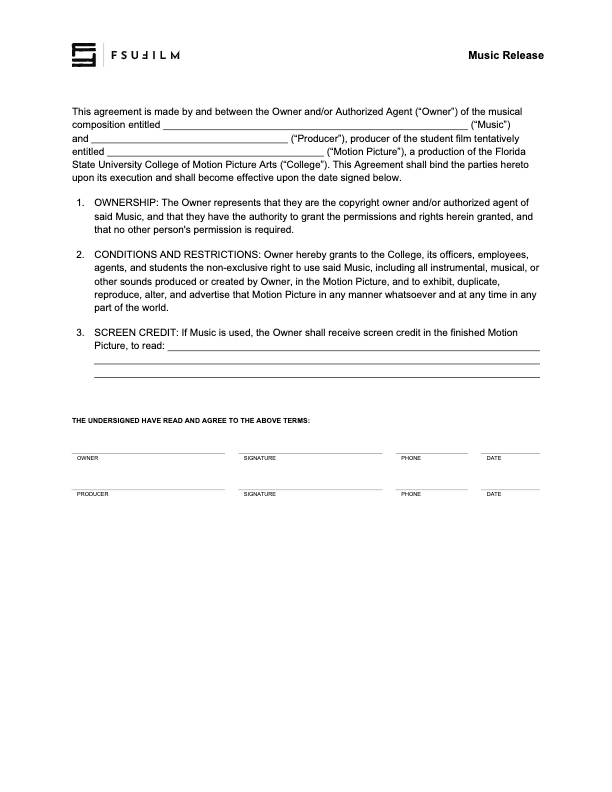
Music Release

Overview

A music release grants permission for a production to use a specific piece of copyrighted music within a film or media project, defining the conditions and restrictions of use and the credit to appear on screen.

Proper music documentation is important because productions must be able to verify that all music included in the film has been legally authorized for use and distribution. Maintaining clear release records helps reduce legal and distribution complications while reinforcing professional practices related to copyright, licensing, and music clearance within film production workflows.

Instructions

The Producer should use this contract agreement with the Owner (or authorized agent) of a musical composition that will be used in the film.

The Producer is responsible for working with the Owner to determine the screen credit in the finished film. All other clauses in the agreement must remain unchanged, unless the Producer is authorized in advance by the Head of Production to make specific amendments to the contract.

Note: F1 and M1 projects are not permitted license music in this manner. Those project must use the Universal Production Music library for any music needs.

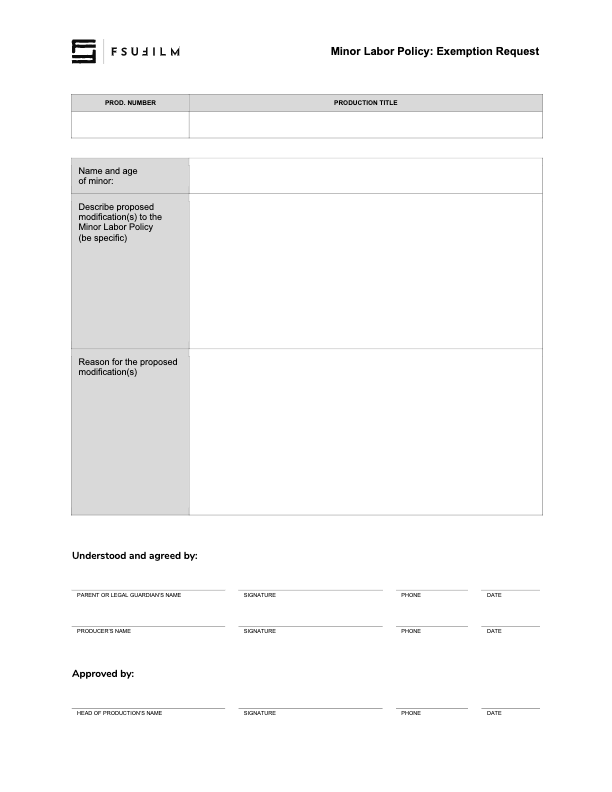
Minor Labor Policy Exemption Request

Overview

Productions seeking to work with minors must use this request process when asking for an exemption from the standard minor labor policy. The request allows the production to explain why the exemption is needed, secure consent from a parent or legal guardian, and provide the information necessary for review before the minor participates in production activity.

This process exists to protect minors from unsafe, excessive, or inappropriate working conditions while ensuring that productions comply with school and university expectations. Because working with children carries additional safety, scheduling, supervision, and legal responsibilities, exemptions must be reviewed carefully rather than assumed.

Instructions

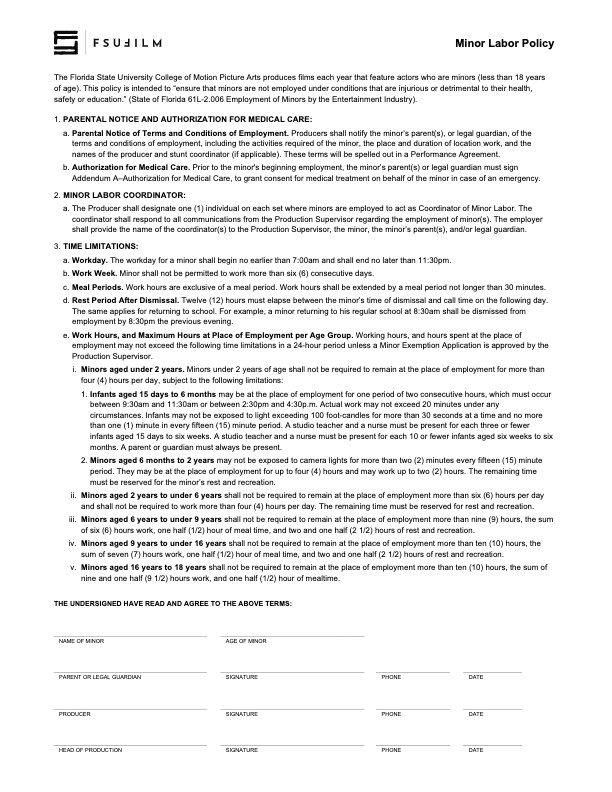
The Minor Labor policy is intended to safeguard children from being employed under conditions that are injurious or detrimental to their health, safety or education.

The Producer of a show is required to work with the parent (or legal guardian) to complete a Minor Labor Policy Agreement, which outlines the conditions of employment. On occasion, however, there can be instances where an aspect of this agreement may be waived or modified, and the Producer may submit this exemption request to the Head of Production. All exemptions must have the consent of the parent or legal guardian, and final approval of requests lies solely with the Head of Production.