Category: MC

  • Work for Hire Agreement

    Work for Hire Agreement

    Overview

    A work for hire agreement establishes that creative work, services, or materials produced by an individual for a production are being created on behalf of the project under agreed-upon terms regarding ownership and usage rights. This document is commonly used when productions involve commissioned creative contributions such as artwork, music, graphics, writing, photography, or other specialized work.

    Clear ownership agreements are important because film productions often combine contributions from many collaborators across multiple creative disciplines. Proper documentation helps avoid confusion regarding intellectual property rights, future usage permissions, and distribution eligibility while reinforcing professional standards related to contracts and production legal workflows.

    Instructions

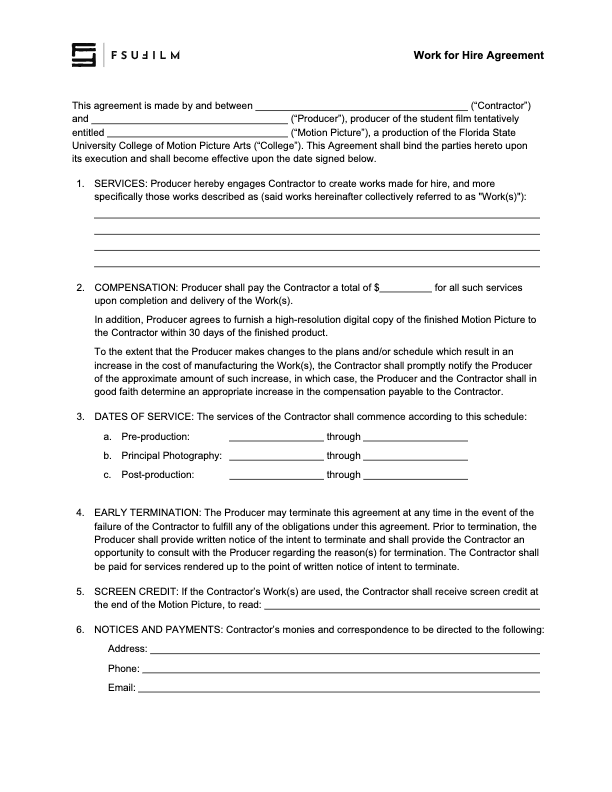
    The Producer should use this contract agreement when hiring someone to create a work-made-for-hire for a production.

    The Producer is responsible for working with the Contractor to determine the services, the compensation structure, the dates of service, and the screen credit in the finished film.

    All other clauses in the agreement must remain unchanged, unless the Producer is authorized in advance by the Head of Production to make specific amendments to the contract.
  • Weapon Authorization Request

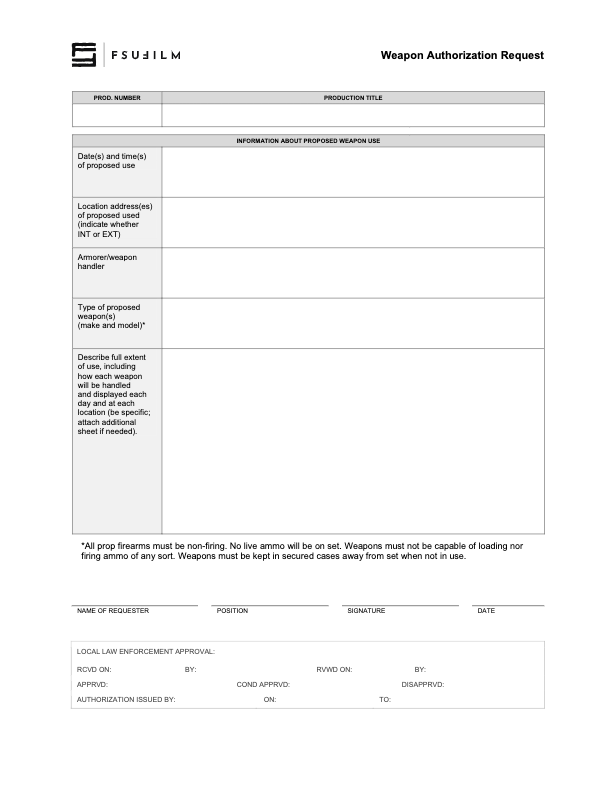
    Weapon Authorization Request

    Overview

    Productions involving prop firearms or other weapons must complete an authorization process before such items may be used during filming. This request process helps productions communicate the nature of the planned weapon use, identify safety considerations, and obtain the necessary approvals prior to production activity.

    Weapons-related oversight is essential because even non-functioning or simulated weapons introduce significant safety, liability, and public communication concerns within production environments. The authorization process helps ensure that productions are approaching these elements responsibly, planning appropriate safety procedures, and coordinating properly with faculty, staff, and any relevant outside parties before filming takes place.

  • Travel Card Agreement

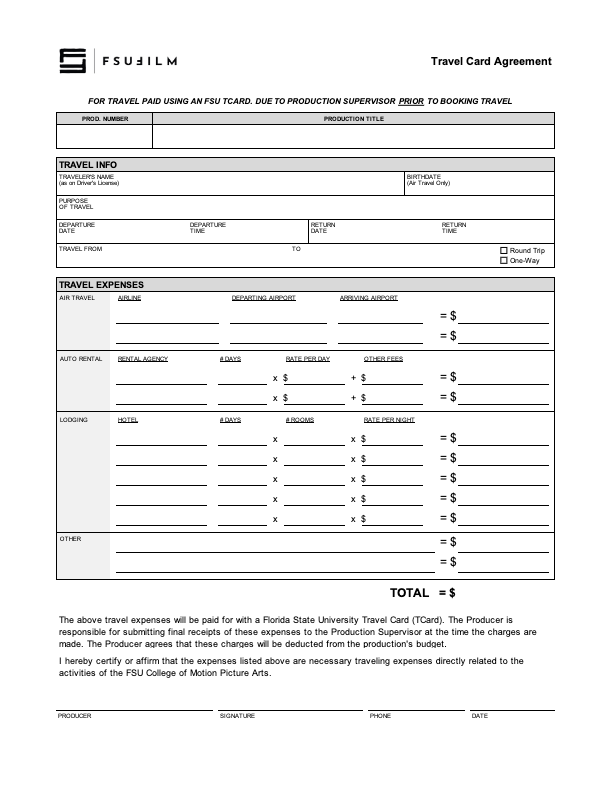
    Travel Card Agreement

    Overview

    The travel card agreement outlines the expectations, responsibilities, and usage policies associated with the use of university-issued travel cards for approved production-related expenses.

    Because university purchasing systems involve strict financial oversight and accountability requirements, students and productions must follow clearly defined procedures when handling institutional funds. The agreement helps ensure that purchases are documented properly, expenses remain compliant with university policies, and financial records can be tracked accurately throughout the production process.

    Instructions

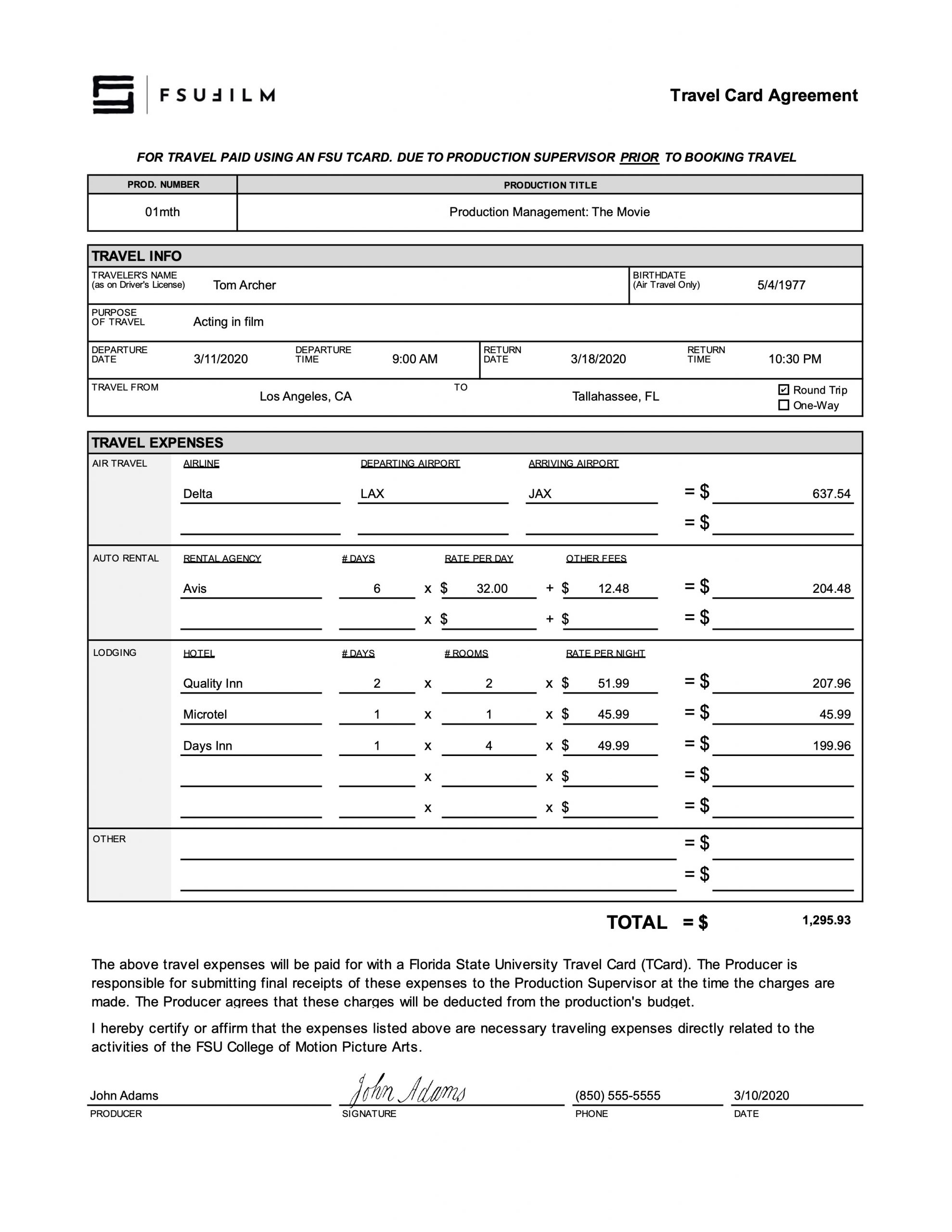
    The Producer should use this agreement for travel paid using a Florida State University Travel Card (TCard). The form must be submitted to the Head of Production prior to booking travel.

    The Producer is responsible for submitting final receipts of the listed expenses to a designated staff member at the time the charges are made. The Producer agrees that these charges will be deducted from the production’s budget.

    Sample

    Here’s a sample of what the completed form should look like:

    Sample of a completed form
  • Trademark Use Agreement

    Trademark Use Agreement

    Overview

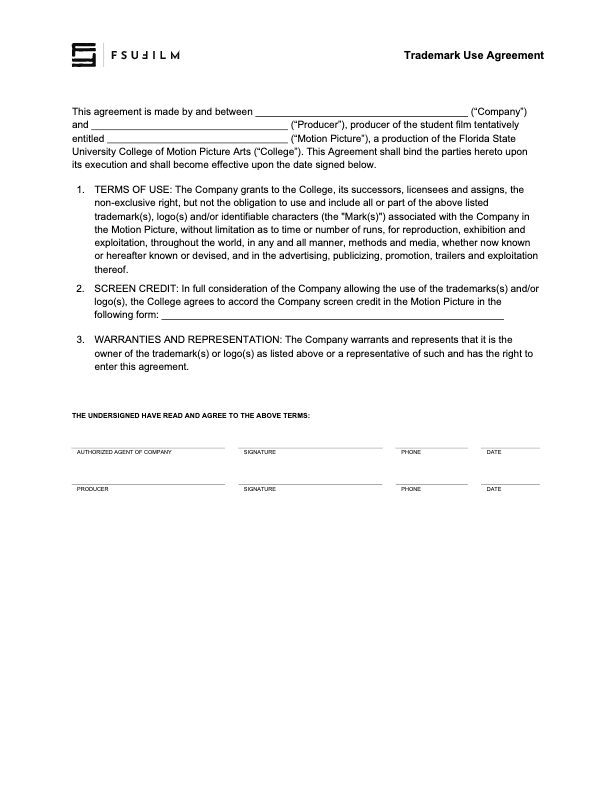
    A trademark use agreement documents permission for a production to display, reference, or incorporate protected brand names, logos, products, or other trademarked materials within a film or related promotional materials.

    Trademark usage can involve important legal and distribution considerations, particularly when projects move into festival exhibition, online release, or broader public circulation. Proper documentation helps productions reduce potential legal complications while encouraging students to think carefully about intellectual property rights, clearance procedures, and professional risk management within production workflows.

    Instructions

    This agreement is to be used to document when rights have been granted to use trademarks, logos and/or other identifiable characters associated with a company or product, in order to maintain a clean chain of title.

    Any fair use claims — allowing the inclusion of trademarks in the finished film without this agreement being filed — must be presented to and cleared by the Head of Production prior to picture lock.

  • Synchronization License Request

    Synchronization License Request

    Overview

    A synchronization license request is drafted when a production wishes to reproduce a specific musical composition in a film, and needs to obtain approval from the copyright holder.

    Proper music licensing is essential because copyrighted songs cannot legally be reproduced within a film intended for festival exhibition, online release, or public distribution without authorization from the rights holder. Understanding synchronization licensing helps students develop stronger professional practices related to copyright compliance, music clearance, and the legal responsibilities associated with using commercial music in film productions.

    INSTRUCTIONS

    A synchronization license is the right to reproduce a specific musical composition in your film. It must be obtained from the copyright owner of the composition, which is usually the publisher.

    You can find out who the publisher is by searching by song title at either ASCAP or BMI. Almost every song is represented by one of these two companies. Songs that are not represented by ASCAP or BMI might be found at the National Music Publishers’ Association “Songfile” website (www.nmpa.org). You will be provided with a contact at the publisher’s Business Affairs or Licensing Department.

    Getting the rights could be as simple as sending letters to the publisher and record label, having them sign and return them. However, you may be required to complete their licensing agreements instead. If this is the case, make sure you have the Head of Production review the agreement before you sign it, to ensure we have the proper releases.

    You must get each license for at least:

    • Two-years
    • Film festival
    • Non-commercial
    • World rights

    Note that you will need to get a synchronization license from the publisher, even if you are making your own sound recording of that song. For example, if you have your actor sing or recite lyrics, whistle or hum the tune, play the song on a musical instrument, or in any way make your own sound recording of the song, you will need to get the synchronization license from the publisher.

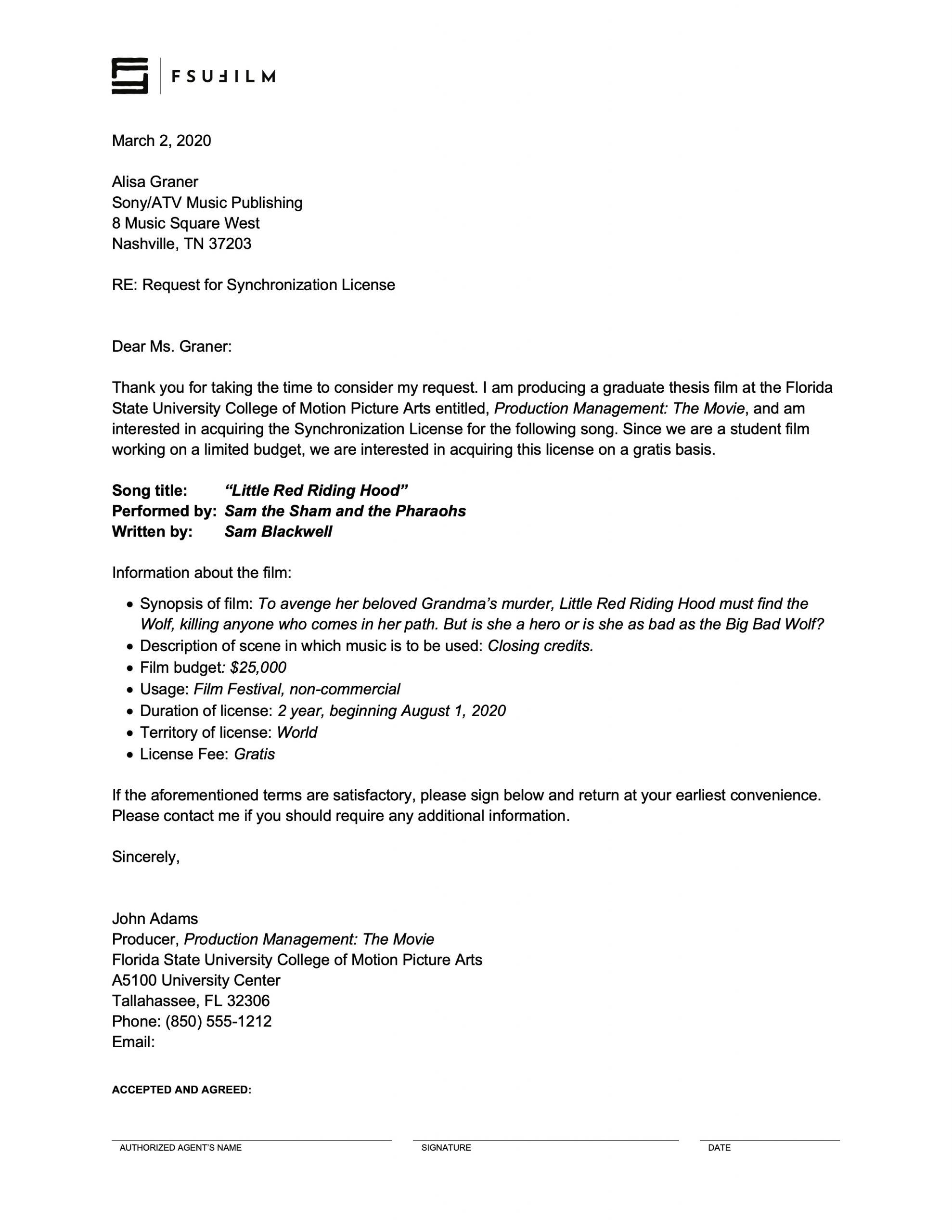
    SAMPLE LETTER

    Here’s a sample of what the letter should look like:

    Sample letter
  • Safety Meeting Report

    Overview

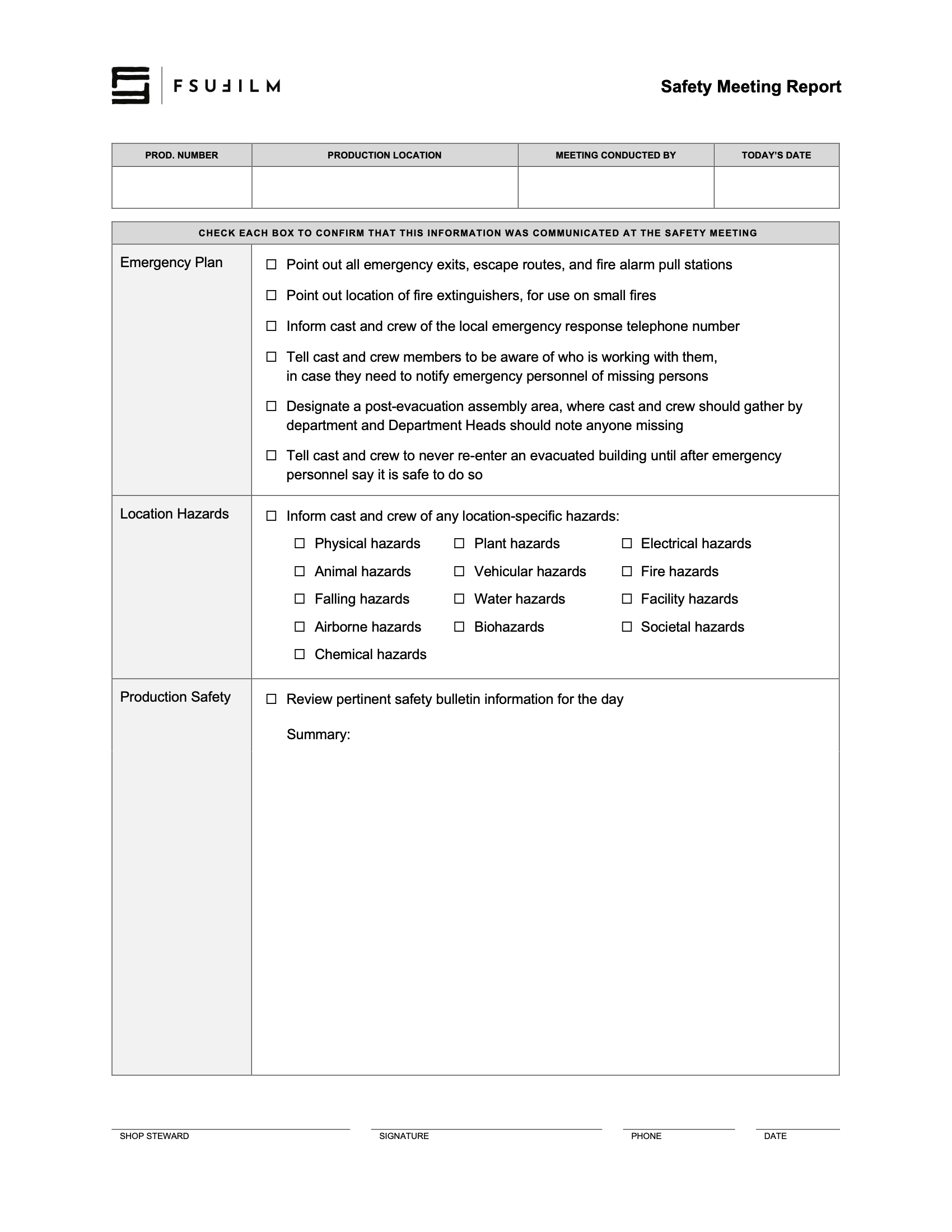
    The safety meeting report documents the safety discussions, procedures, identified risks, and production-specific concerns reviewed with cast and crew before filming activities take place.

    Formal safety documentation is important because film productions often involve physical activity, equipment, environmental hazards, transportation, and other situations that require clear communication and shared awareness among the crew. Maintaining written safety records helps reinforce accountability, supports safer production practices, and encourages students to approach production planning with a stronger understanding of risk management and on-set responsibility.

    INSTRUCTIONS

    The Safety Meeting Report is to be completed by a Shop Steward to document what was covered in the morning safety meeting. It can also be used by the Assistant Director as a cheat sheet for what needs to be addressed in the meeting.

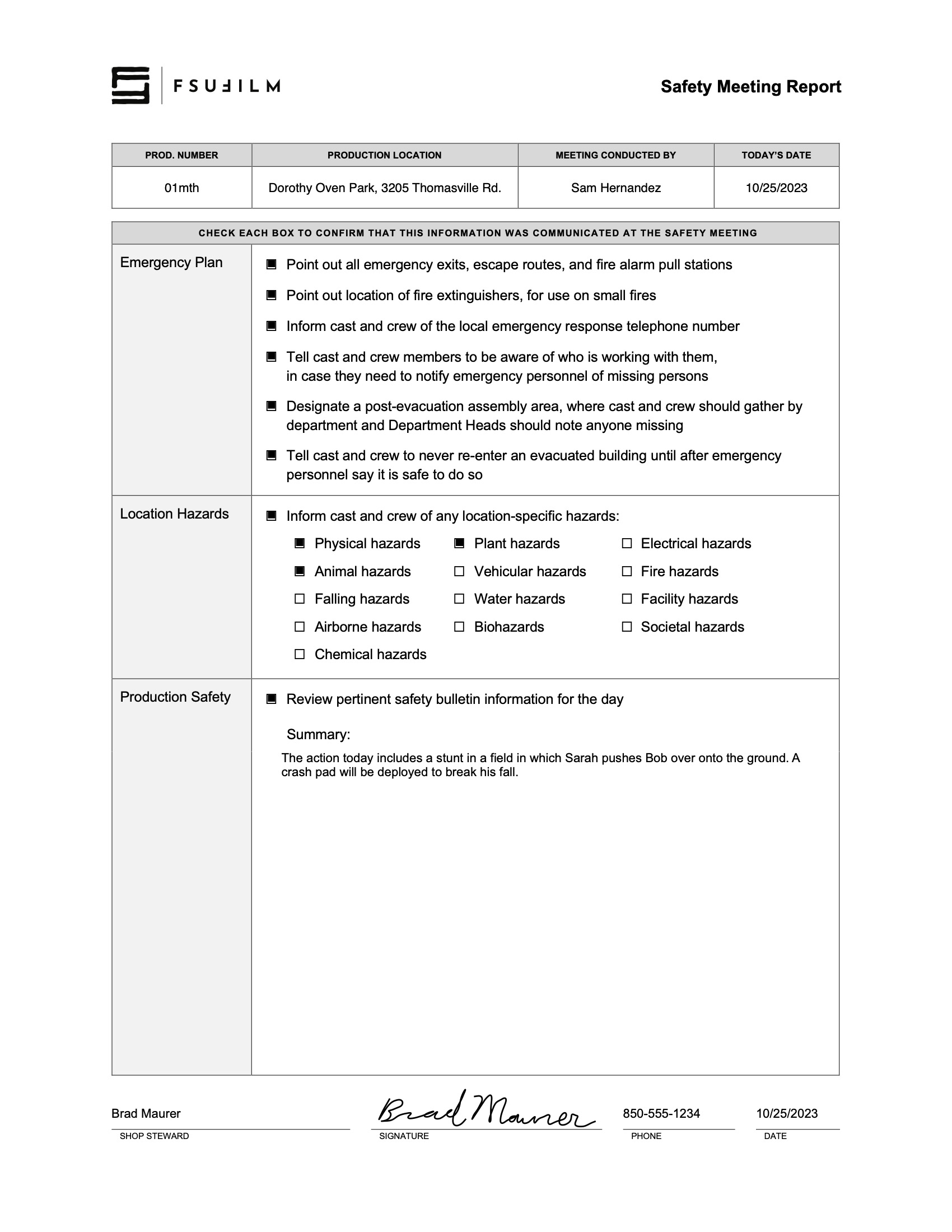
    SAMPLE

    Here’s a sample of what the completed report should look like:

    Sample of a completed form
  • Reimbursement Voucher

    Reimbursement Voucher

    Overview

    A reimbursement voucher is used when a student or production seeks repayment for approved out-of-pocket expenses made on behalf of a production or related project activity. This process typically requires documentation such as receipts, purchase records, and supporting information verifying that the expense complied with approved production or university guidelines.

    Because university funds and production budgets require careful financial oversight, reimbursement requests must be documented accurately and submitted according to established procedures. Maintaining organized reimbursement records helps ensure accountability, supports accurate financial tracking, and reinforces professional habits related to production expense management.

    Instructions

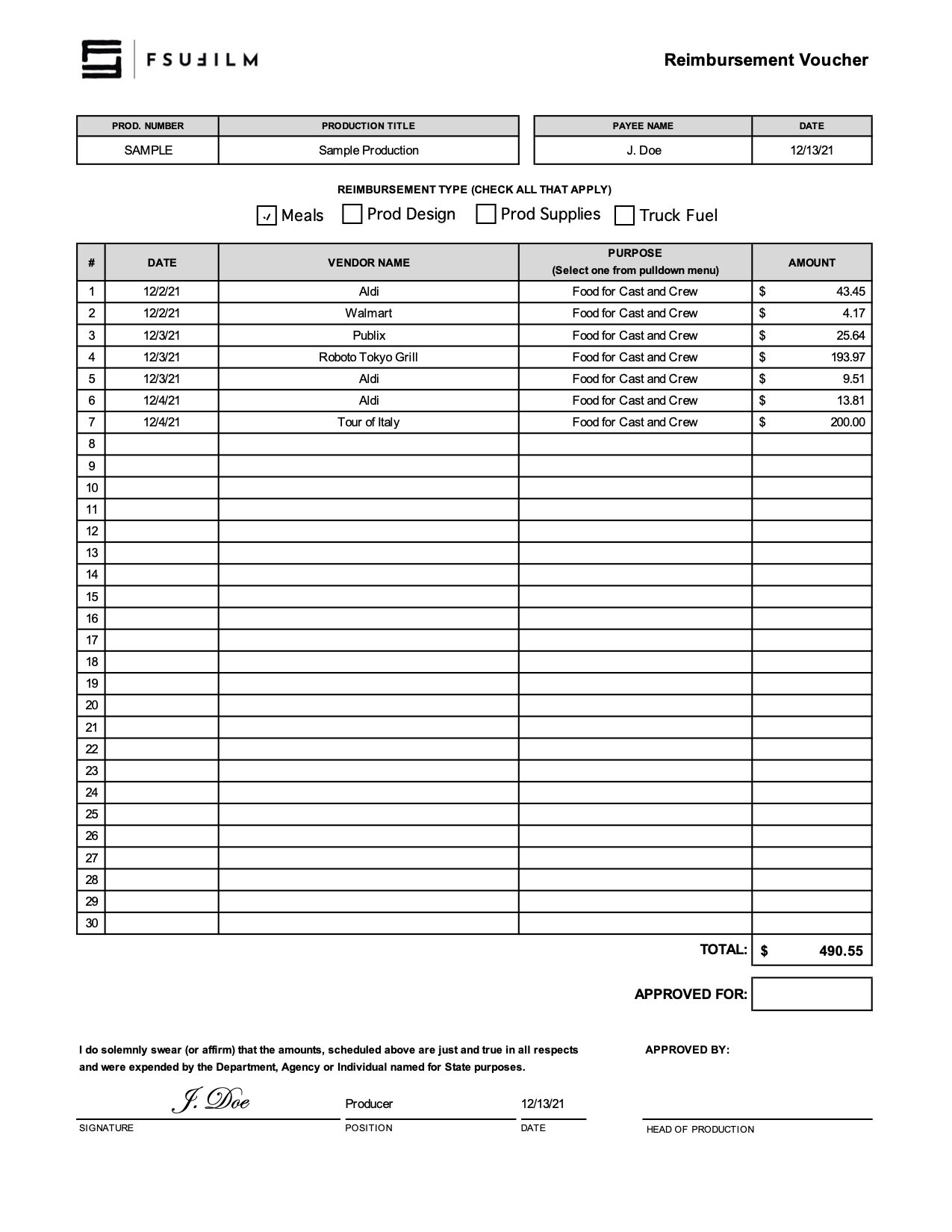
    Students should submit this log to the Film School Accountant for reimbursements for meals, production design, production supplies, and/or truck fuel that were used on a production.

    FSU does not allow for film school funds to be used on tips. Therefore, make sure you only list the subtotal BEFORE any tip amount is added.

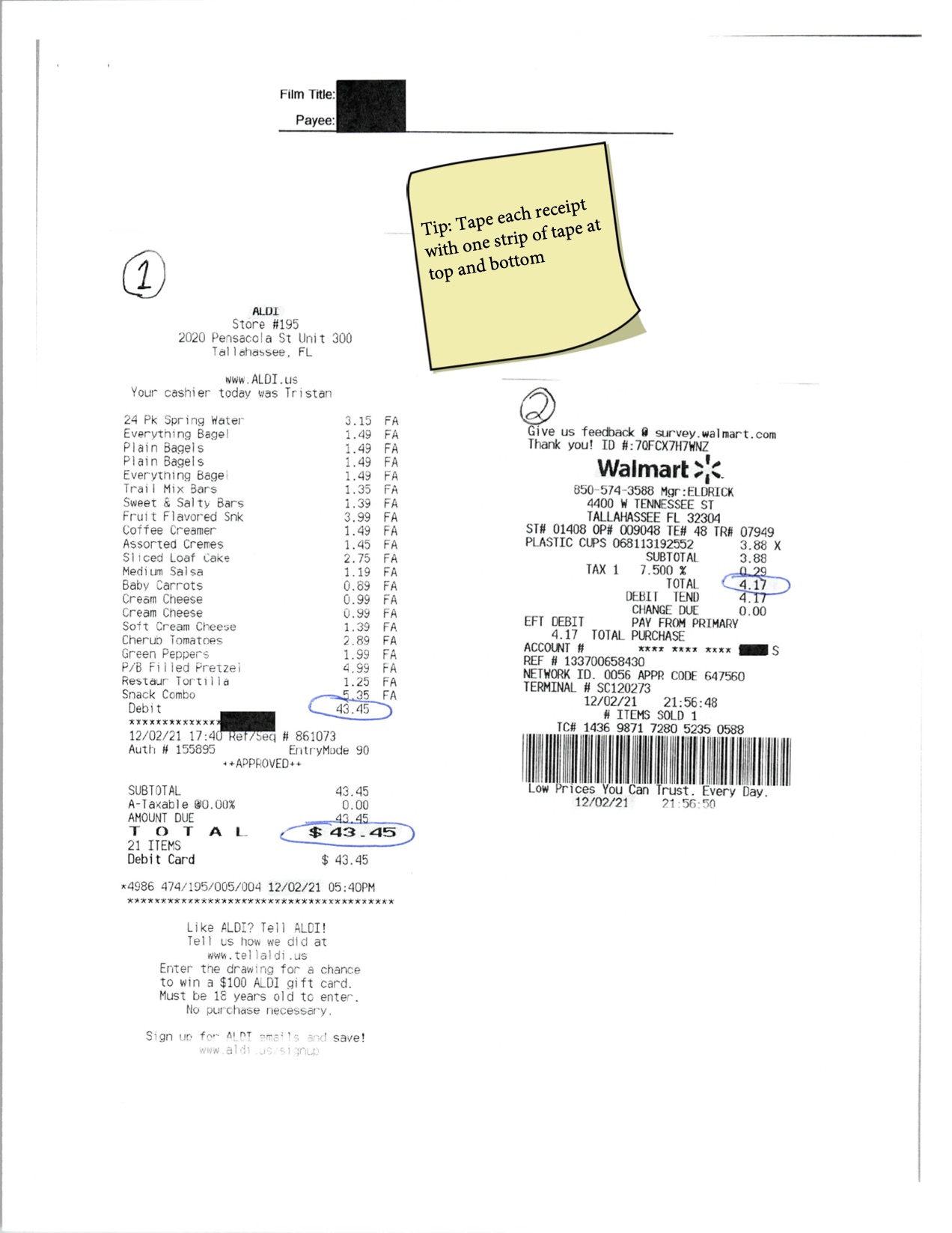
    Tape receipts on supplemental sheets, ensuring that each receipt is taped at both the top and the bottom edge of the receipt.

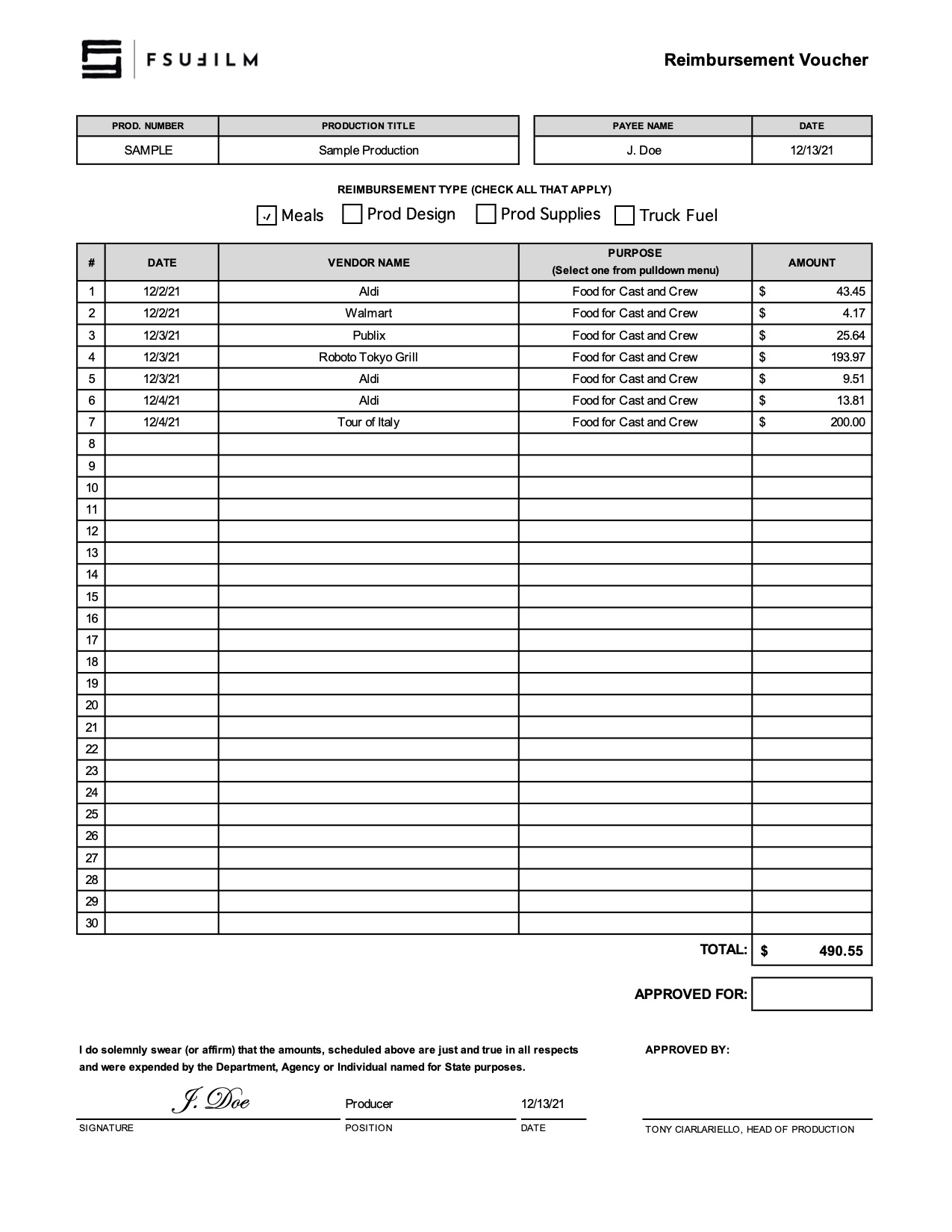
    Sample

    Here’s a sample of what the completed form should look like:

    Sample of a completed form
    Sample sheet of receipts
  • Refusal of Medical Aid

    Refusal of Medical Aid

    Overview

    The Refusal of Medical Aid form documents situations in which an individual involved in a production declines medical assistance after an incident, injury, or safety-related event occurring during production activity.

    Proper documentation of medical incidents is important because productions have a responsibility to maintain clear records related to on-set safety, injuries, and incident response. Recording a refusal of medical aid helps establish accurate documentation of the situation while reinforcing the importance of communication, accountability, and safety procedures within production environments.

    Instructions

    If a person is injured or experiences a medical emergency during the workday, the standard procedure to prioritize getting the person medical attention. There are circumstances, however, where an individual may choose to not get medical aid.

    This form should only be used after an injury, illness, or medical incident in which an individual declines first aid, medical treatment, or transport after assistance has been offered. The form exists to document that the individual voluntarily refused care and understood the risks associated with that decision.

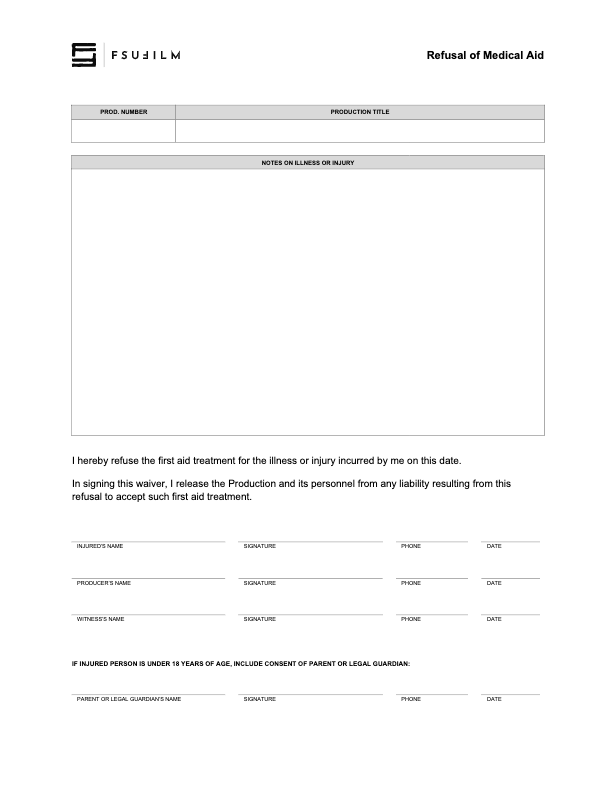
    The form should be completed as soon as possible following the incident. Producers or set safety personnel should ensure that all sections are filled out clearly and accurately, including:

    • the date and location of the incident;
    • the nature of the illness or injury;
    • the medical aid or treatment that was offered;
    • the reason the individual declined assistance, if provided.

    The injured or ill individual should personally complete and sign the form whenever feasible. A witness should also sign the form.

    Signing the form documents that care was declined at the time of the incident and that the individual has released the production from any liability resulting from the refusal of medical aid. Signing the form does not prevent the individual from later seeking medical care.

    This form should be retained with the production’s safety paperwork and incident documentation. If the situation appears serious or life-threatening, students should immediately contact emergency services and notify faculty, even if the individual initially refuses assistance.

  • Production Travel Agreement

    Production Travel Agreement

    Overview

    The production travel agreement outlines the expectations, approval procedures, and reimbursement policies associated with travel conducted for production-related purposes. This is used when travelers are expected to pay for eligible travel expenses upfront and then submit the appropriate documentation for reimbursement afterward.

    Because production travel involves university funding, liability, scheduling, and financial oversight considerations, expenses must be documented carefully and follow established procedures. The agreement helps ensure that travel is approved in advance, expenses remain compliant with university policies, and reimbursement requests can be processed accurately and efficiently.

    Instructions

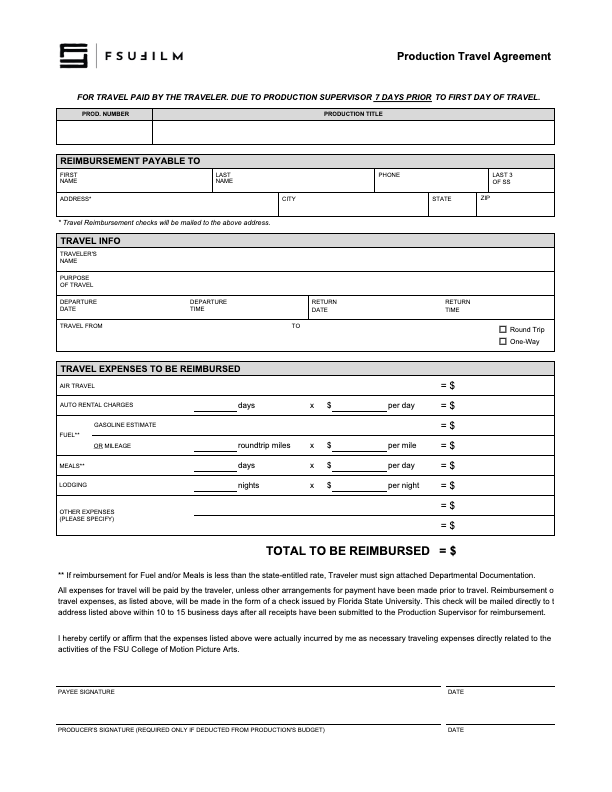
    This agreement is for production travel expenses to be paid for by the traveler and then reimbursed. The Producer of the production should assist the traveler with the completion of the form and ensure it is submitted to the Head of Production (or a designated delegate) at least seven days prior to the first day of travel.

    Reimbursed travel expenses will be made in the form of a check issued by Florida State University. The check will be mailed directly to the payee within 15 days of all receipts being submitted to the Head of Production (or a designated delegate).

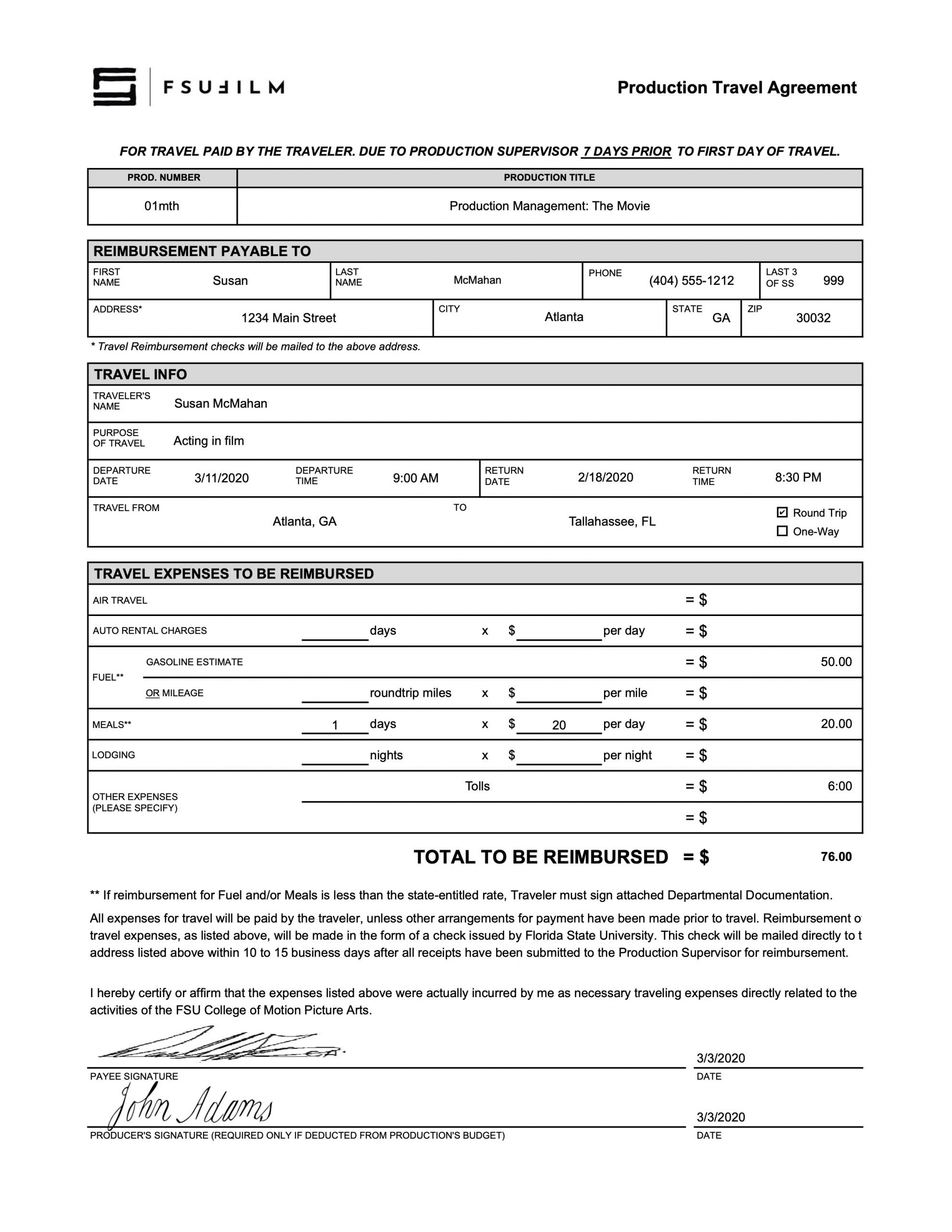
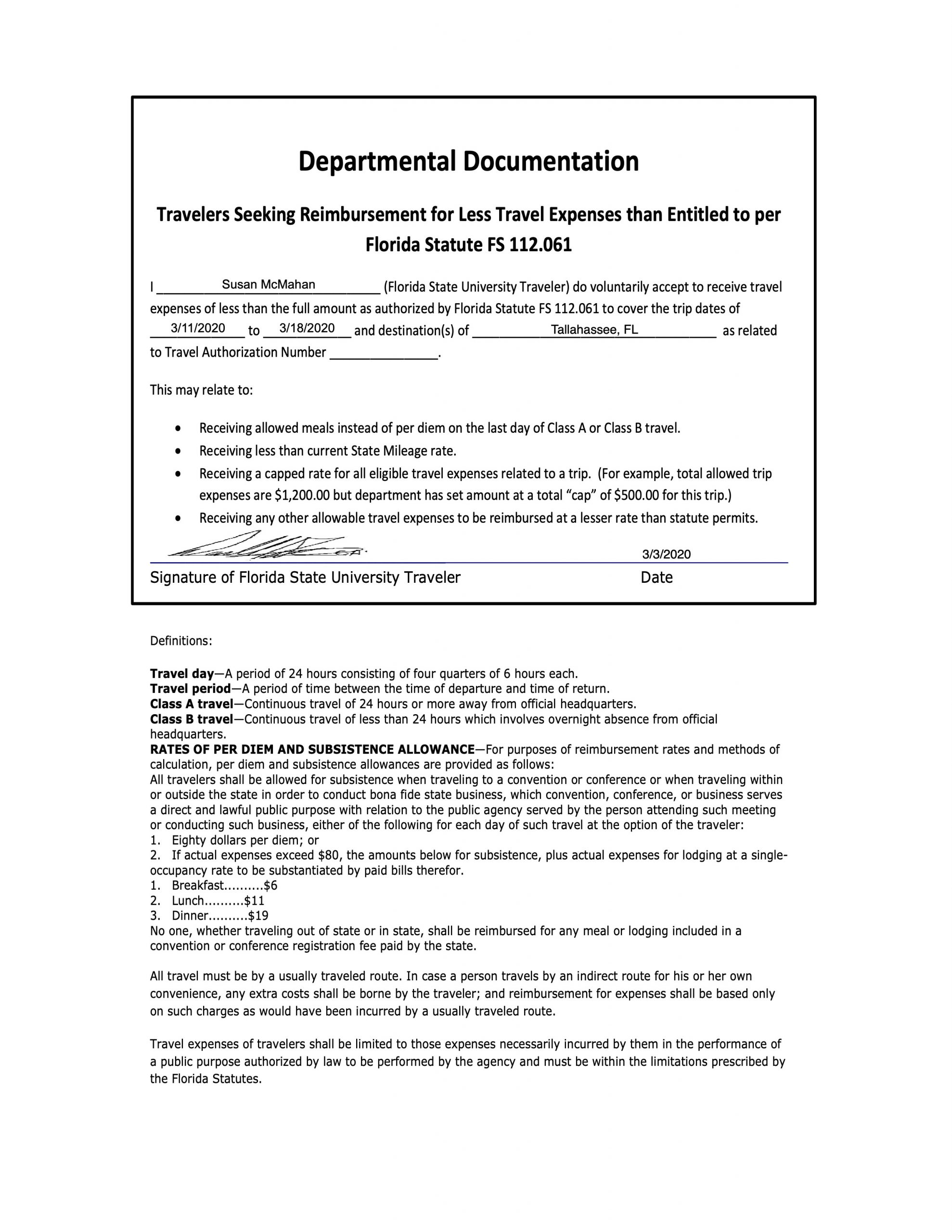
    Sample

    Here’s a sample of what the completed form should look like:

    Sample of a completed form (page one)
    Sample of a completed form (page two)
  • Picture Vehicle Agreement

    Picture Vehicle Agreement

    Overview

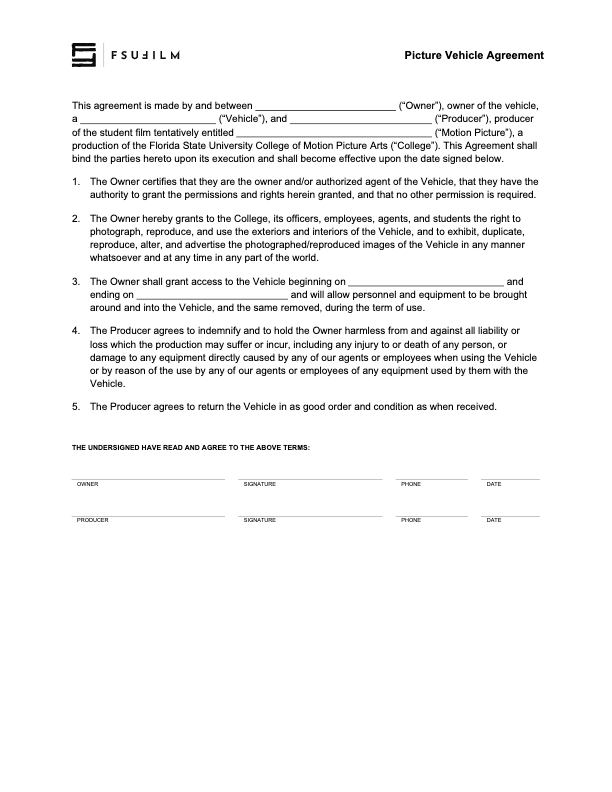
    A picture vehicle agreement documents permission and terms related to the use of a privately owned or externally provided vehicle appearing within a production as an on-camera element.

    Because vehicles used on camera can involve liability, insurance, scheduling, and property-use considerations, productions must clearly document the terms under which the vehicle is being used. Proper agreements help protect both the production and the vehicle owner while reinforcing professional practices related to permissions, risk management, and production documentation.

    Instructions

    The Producer should use this contract agreement with the Owner of a vehicle that will be used as a picture vehicle in a production.

    The Producer is responsible for working with the Owner to determine the dates the vehicle will be used.

    All other clauses in the agreement must remain unchanged, unless the Producer is authorized in advance by the Head of Production to make specific amendments to the contract.