Category: F2

  • Location Hazard Assessment

    Overview

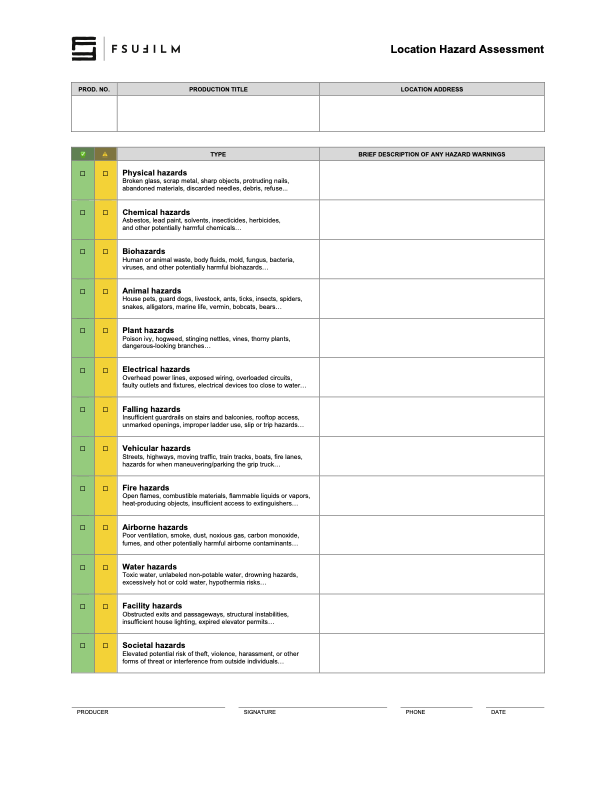
    The Location Hazard Assessment checklist is used to identify potential risks at a filming location before production takes place. These may include physical hazards, chemical hazards, biohazards, animal or plant hazards, electrical hazards, fall risks, environmental concerns, or other conditions that could affect cast, crew, equipment, or the public.

    This assessment is important because location risks are easiest to manage when they are identified early. Documenting hazards in advance allows the production and school to determine whether additional safety measures, approvals, adjustments, or alternate plans are needed before filming begins.
    Instructions

    The Producer is responsible for conducting a thorough inspection of every shooting location and completing a separate Location Hazard Assessment form for each site. This form should be completed before the project’s tech scout or director’s prep so that any identified risks can be reviewed with faculty in advance.

    When completing the form, be specific and practical. The goal is not simply to identify hazards, but to document how the production might mitigate or manage them. If a hazard is present, clearly describe the precautions the production could take to reduce risk.

    Hazards may include:

    • Physical hazards
    • Chemical hazards
    • Biohazards
    • Animal hazards
    • Plant hazards
    • Electrical hazards
    • Falling hazards
    • Vehicular hazards
    • Fire hazards
    • Airborne hazards
    • Water hazards
    • Facility hazards
    • Societal hazards

    The assessment should reflect the actual conditions of the location at the time of scouting. Productions should revisit and update assessments if conditions significantly change prior to filming.

    Sample

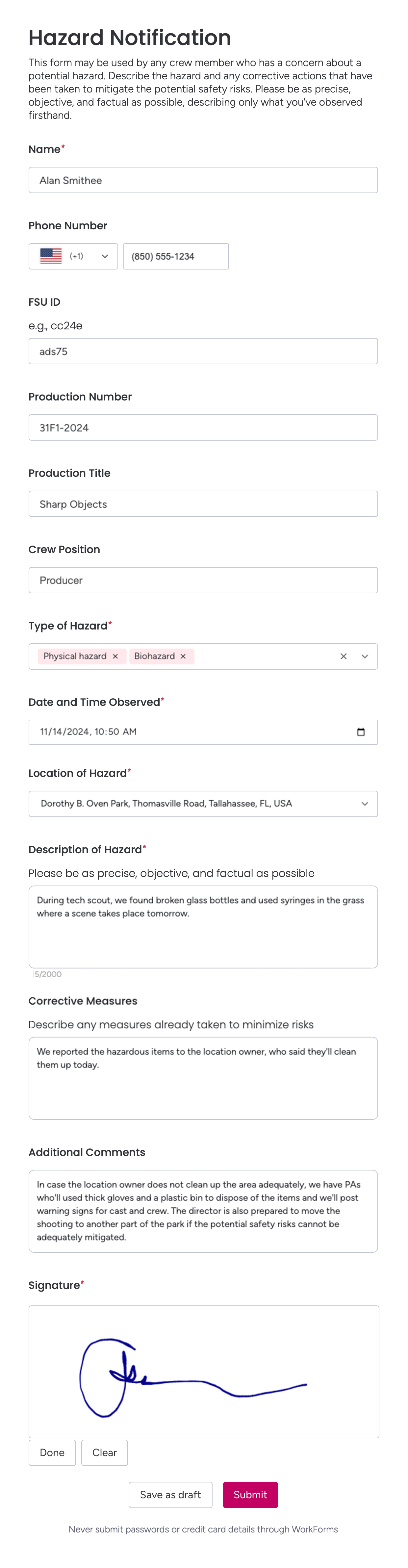
    Here’s a sample version of what the completed form should look like:
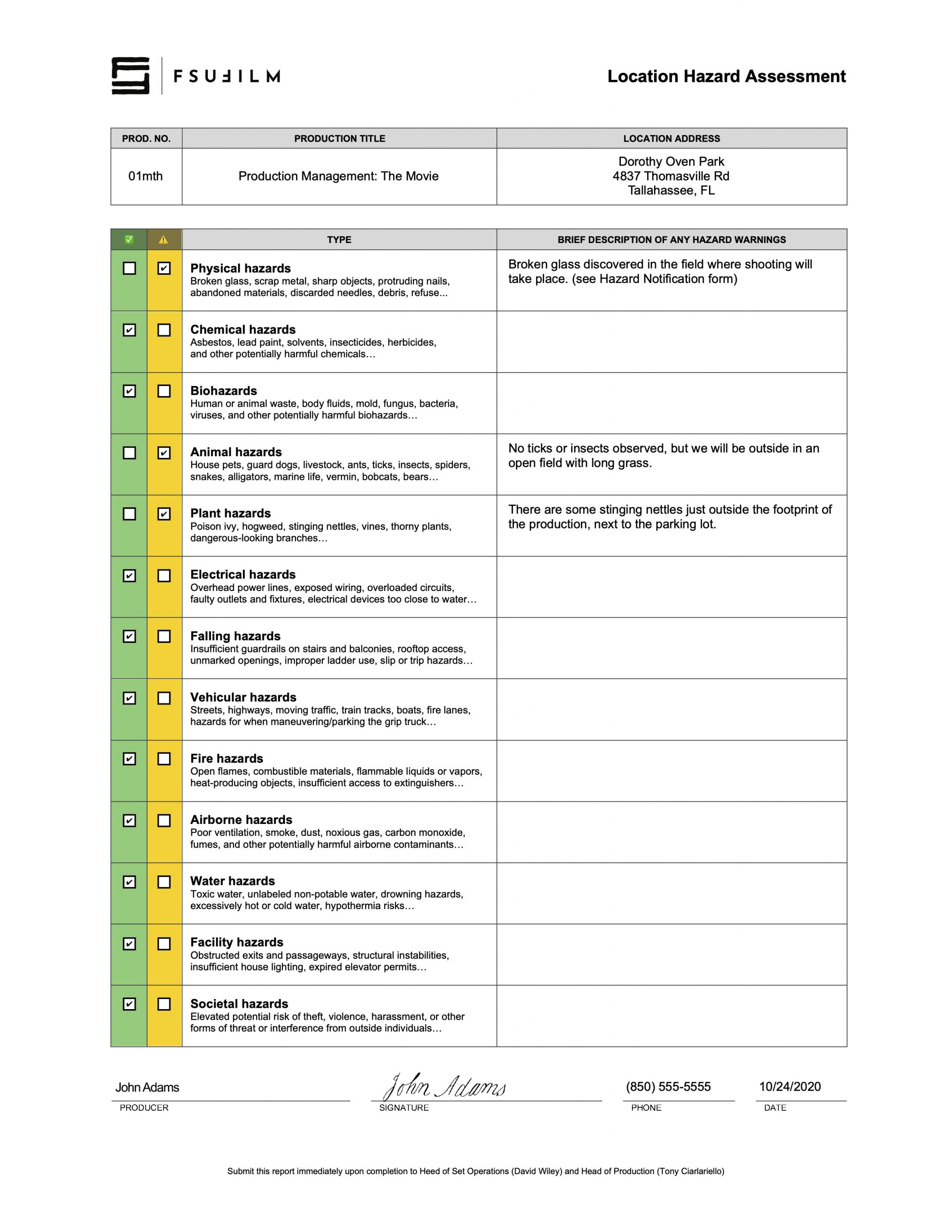
    Sample form
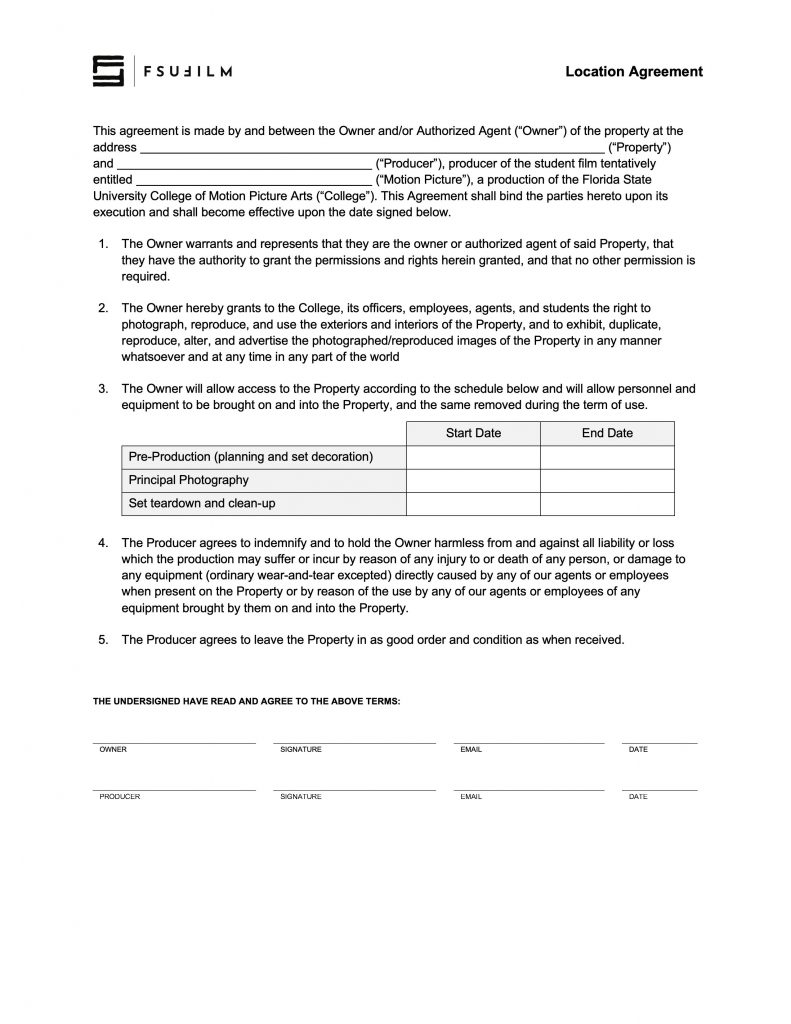
  • Location Agreement

    Location Agreement

    Overview

    The Location Agreement is used with a location owner or authorized agent to secure permission for a production to use and photograph a property. It establishes the production’s right to film at the location and documents the basic terms of that access.

    This agreement is essential because productions cannot assume permission to film on private or controlled property. Written approval protects the production, the school, and the property owner by clarifying access, usage rights, and the conditions under which the location may appear in the finished film.

    Instructions

    The Producer should use this contract agreement with the Location Owner (or authorized agent), in order to have the right to use and photograph the interiors and exteriors of the property.

    The Producer is responsible for working with the Location Owner to determine the start and end dates for when the show will have access to the location. (The Producer is additionally responsible for drafting a Location Shooting Plan Agreement with the Location Owner.)

    All other clauses in the agreement must remain unchanged, unless the Producer is authorized in advance by the Head of Production to make specific amendments to the contract.

  • Life Story Rights

    Life Story Rights

    Overview

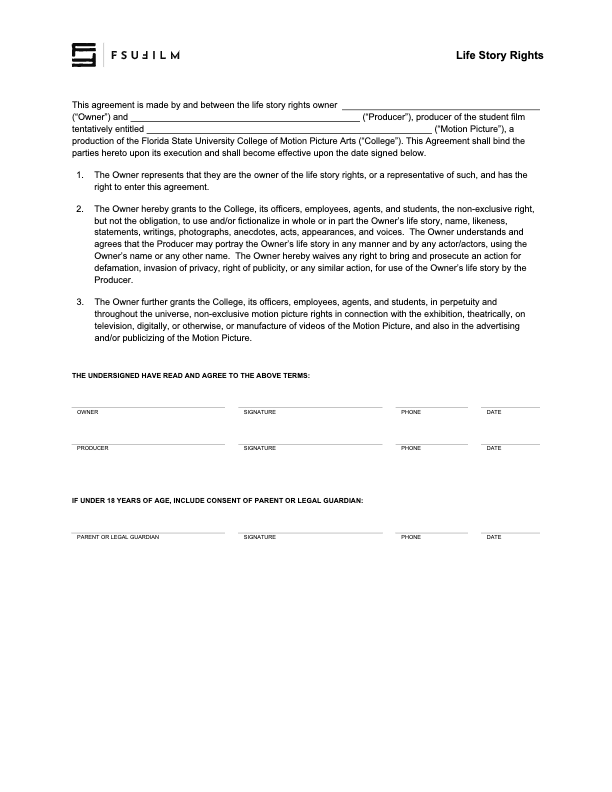
    The Life Story Rights agreement is used when a production wants to use or fictionalize a person’s life story, name, likeness, statements, writings, photographs, anecdotes, acts, appearances, or voice. The Producer works with the owner of those rights to secure permission through the approved agreement.

    This agreement is important because stories based on real people can involve significant personal, legal, and ethical considerations. Proper documentation helps ensure that the production has permission to use the material and that any changes to the agreement are approved in advance by the Head of Production.

    Instructions

    The Producer should use this contract agreement with the Owner of the life story rights, in order to use and/or fictionalize the Owner’s life story, name, likeness, statements, writings, photographs, anecdotes, acts, appearances, and voices.

    All clauses in the agreement must remain unchanged, unless the Producer is authorized in advance by the Head of Production to make specific amendments to the contract.

  • Image Release

    Image Release

    Overview

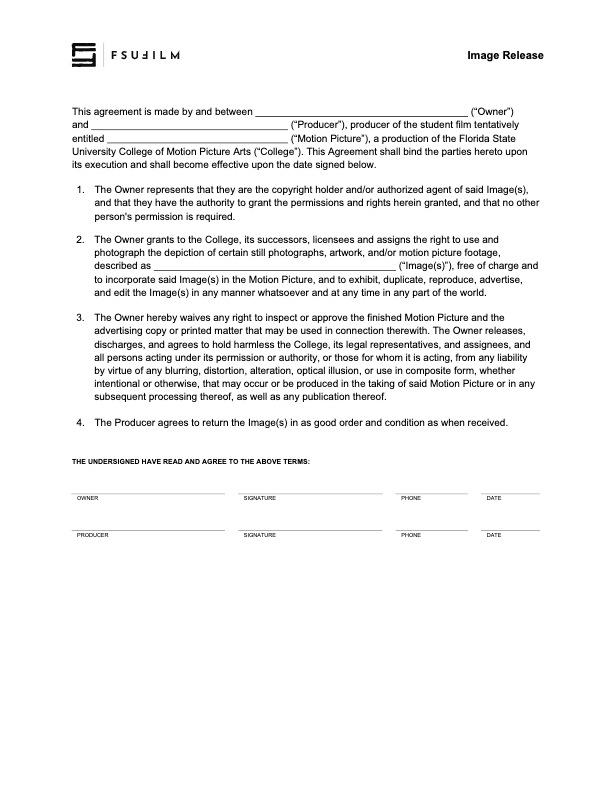
    The Image Release is used when a production wants permission to use or photograph a still image, artwork, graphic, or other copyrighted visual material in a film. The Producer secures the release from the copyright holder or authorized agent.

    This form is important because images found online, in books, in archives, or in personal collections are not automatically available for use in student films. Proper releases help productions avoid rights issues during delivery, festival submission, online exhibition, or future distribution.

    Instructions

    The Producer should use this contract agreement with the copyright holder (or authorized agent) for the right to use and photograph the depiction of still photographs, artwork, and/or motion picture footage.

    All clauses in the agreement must remain unchanged, unless the Producer is authorized in advance by the Head of Production to make specific amendments to the contract.

  • Hazard Notification

    Hazard Notification

    Overview

    The Hazard Notification form may be used by any crew member who has a concern about a potential hazard during production. The form allows the crew member to describe the hazard and identify any steps they believe may be needed to address it.

    This process is important because safety responsibility does not belong only to producers, department heads, and shop stewards. Giving any crew member a clear way to report hazards helps productions identify risks earlier, respond more responsibly, and reinforce a culture where safety concerns are taken seriously.

    Instructions

    The Hazard Notification form may be used by any crew member who has a concern about a potential hazard. Use the form to describe the hazard and to describe any corrective actions that have been taken (or could be taken). Please be as precise, objective, and factual as possible, describing only what you’ve observed first-hand.

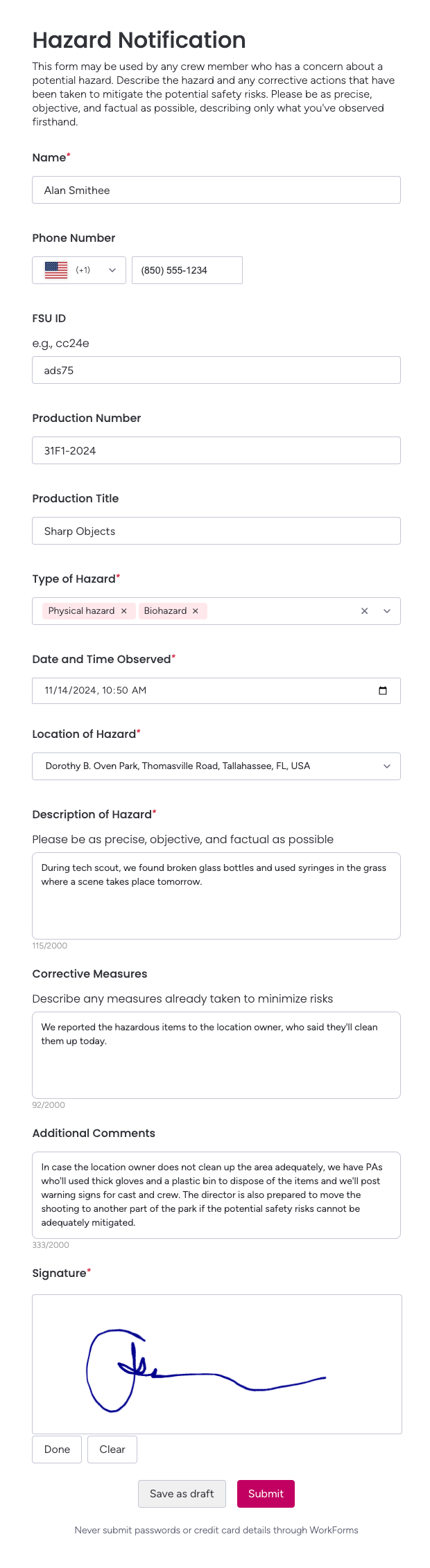
    Sample Form

    Here’s a sample of what the completed form should look like:
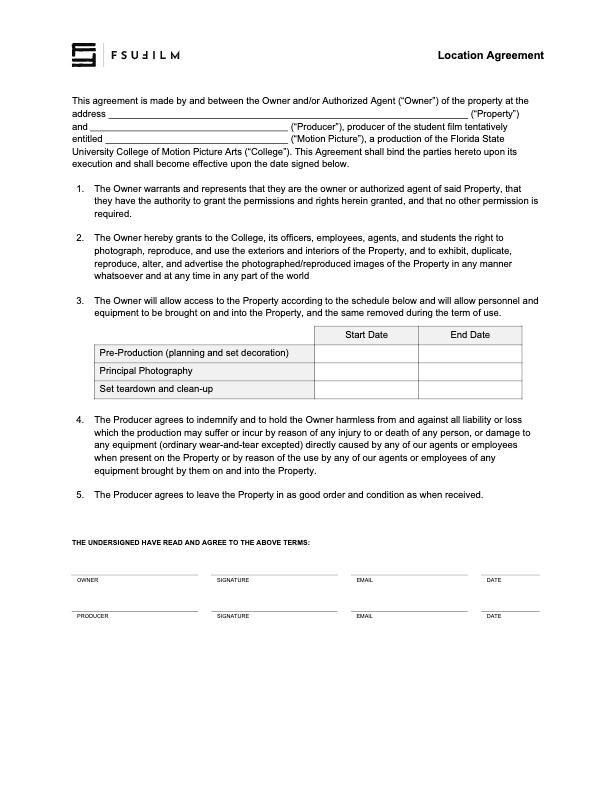
    Sample form
  • Depiction Release

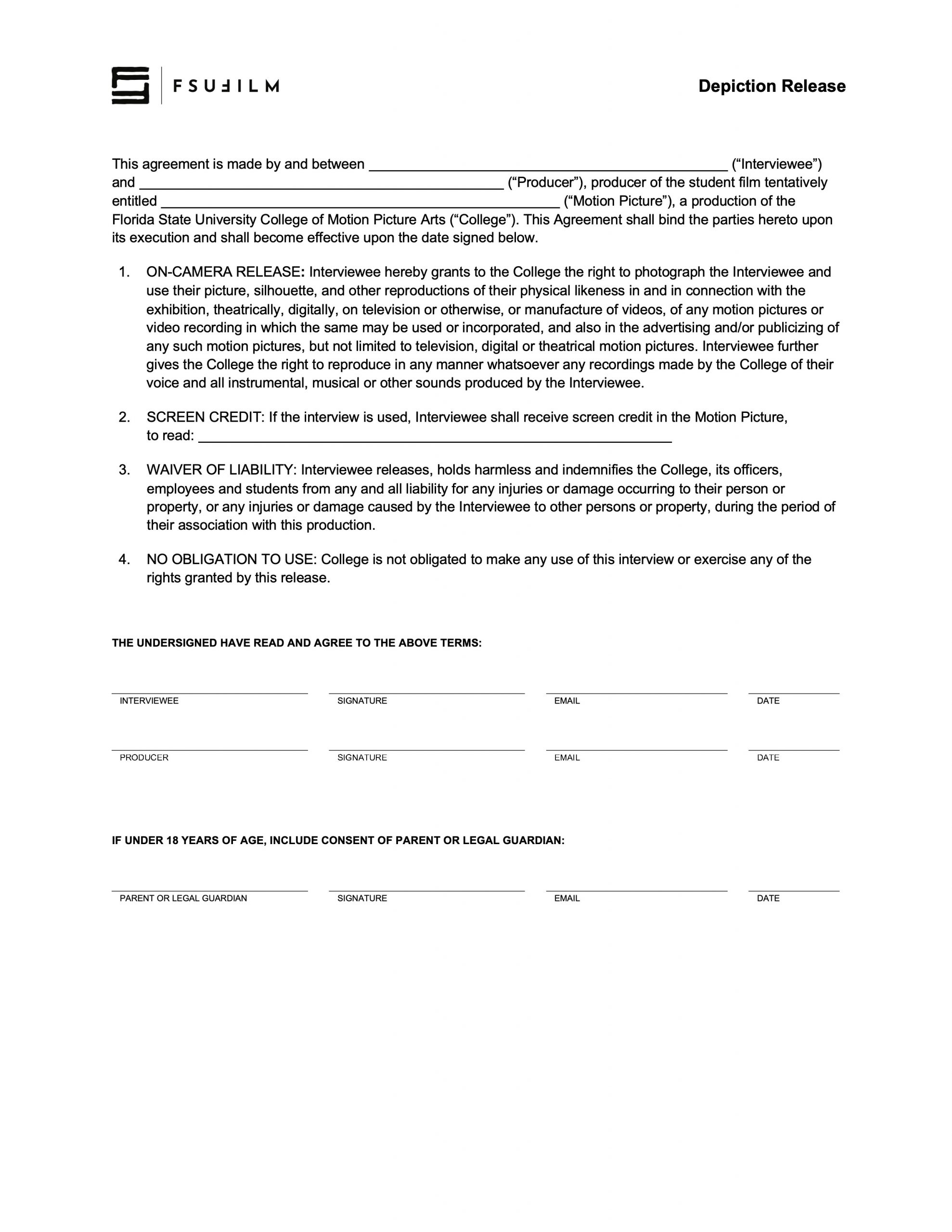
    Depiction Release

    Overview

    The Depiction Release is used for documentary projects when an interviewee gives the production permission to record their voice and likeness and use that material in the film.

    This agreement is important because documentary subjects must clearly understand and authorize how their recorded participation may be used. Proper releases protect both the production and the interviewee while supporting ethical, professional, and legally sound documentary practice.

    Instructions

    The Producer should use this contract agreement with an Interviewee for a documentary project, in order to have the right to record their voice and likeness and use it in the film.

    The Producer is responsible for working with Interviewee to determine the screen credit in the finished film.

    All other clauses in the agreement must remain unchanged, unless the Producer is authorized in advance by the Head of Production to make specific amendments to the contract.

  • Dialogue List

    Dialogue List

    Overview

    The Dialogue List is a delivery document that identifies and organizes all spoken dialogue and on-screen text appearing in the finished film. This is used for captions, subtitles, accessibility workflows, sound post-production reference, and final delivery documentation.

    Accurate dialogue documentation is important because downstream workflows such as captioning, subtitling, localization, accessibility compliance, and archival delivery depend on having a reliable written record of the film’s spoken content. Maintaining a clean and organized dialogue list also helps productions avoid inconsistencies or omissions during final delivery.

    Instructions

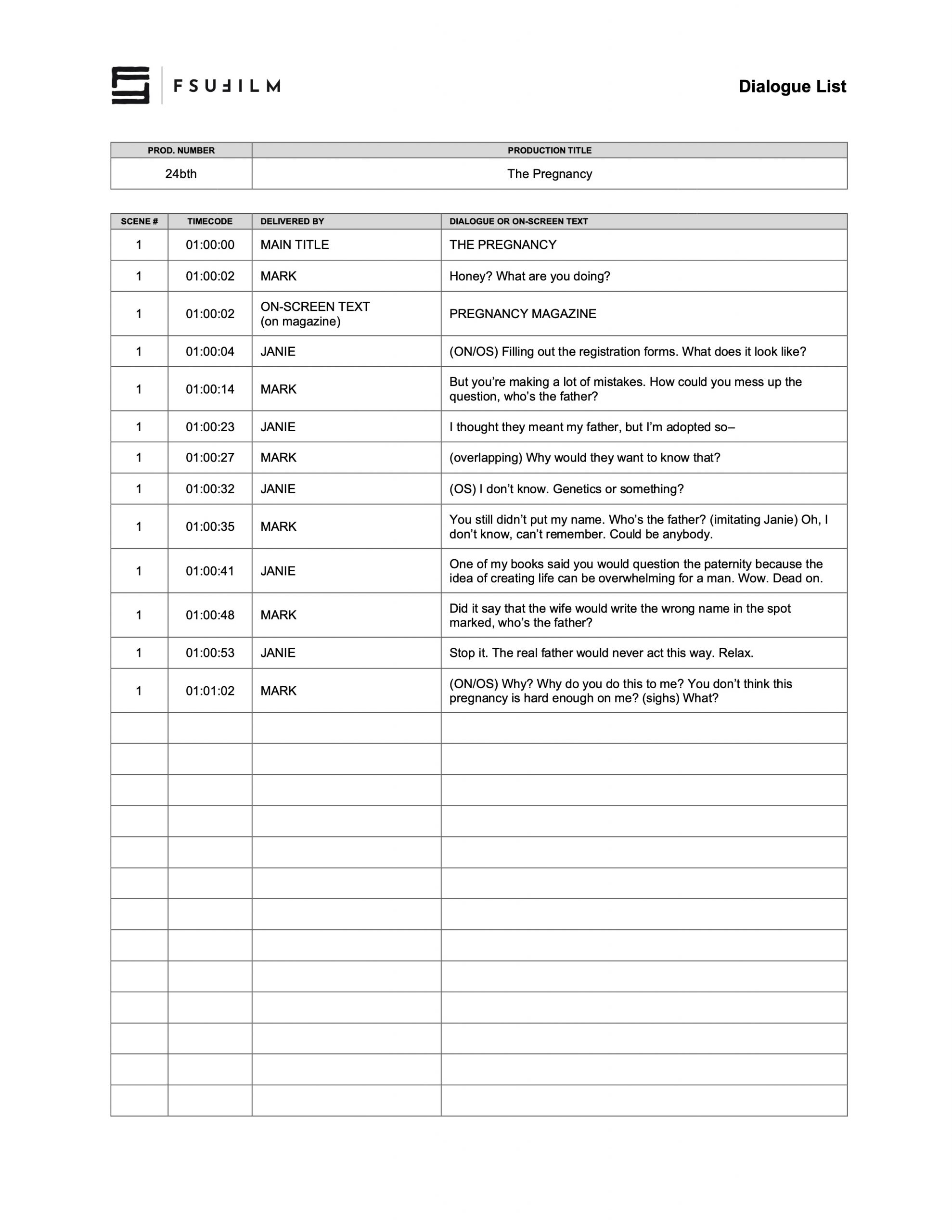
    When a film is sent to a foreign language film festival, the festival will add subtitles in the local language based on this Dialogue List. The form should include all spoken dialogue and on-screen text that is in the final film, including the timecode of when each occurs.

    SAMPLE

    Here’s a sample of what the completed form should look like:
    Sample of a completed form
  • Crowd Release

    Crowd Release

    Overview

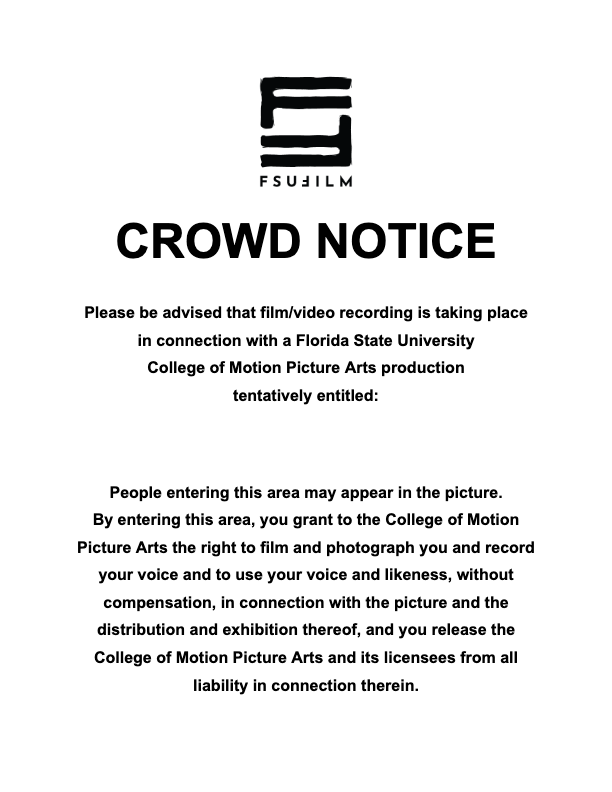
    A Crowd Release grants the production permission to photograph and use the likenesses of individuals appearing as part of a crowd scene or public group within the film. It should be posted in highly visible places when a production cannot lock down a public space and get signed releases from all passersby.

    This release is important because productions must secure permission to use identifiable individuals in footage intended for exhibition, festivals, online release, or distribution. Crowd releases help productions manage situations involving large groups more efficiently while still ensuring that participants have authorized the use of their image in the finished project.

    Instructions

    In some situations, especially in public spaces that the production cannot lock down, it is not always possible to get signed releases from every individual that appears in a shot. This Crowd Notice sign can be used in such situations to alert passersby that, by entering an area, their voice and likeness may be recorded and used in the film.

    If a production plans to use this signage, the Producer should check in advance with the Location Owner to make sure they are okay with the signs being posted around the location.

    When posting the signs, pay particular attention to the flow of passersby through the area. Identify strategic positions for placing the signs so that they are clearly visible to any passersby, but out of view of the camera.

  • Crew Replacement Approval

    Crew Replacement Approval

    Overview

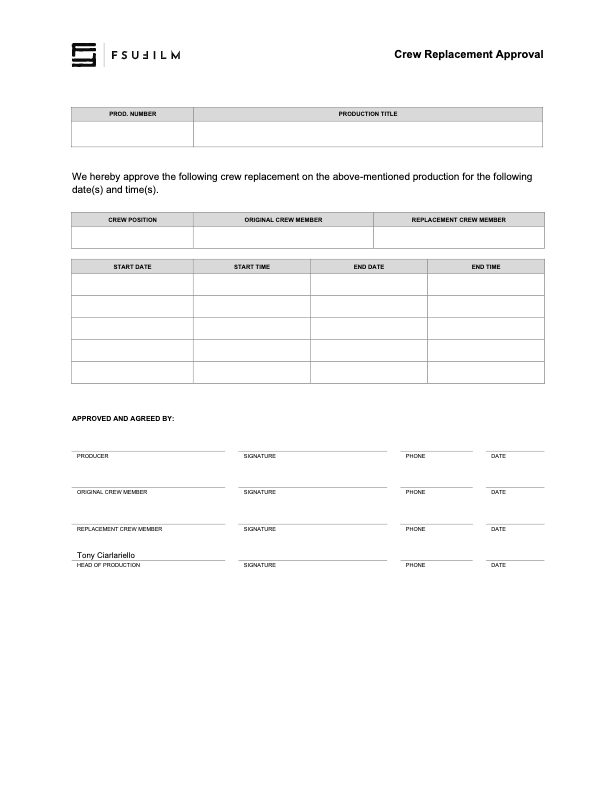
    The Crew Replacement Approval process is used when a production seeks permission to replace a crew member after assignments have already been finalized.

    Crew changes can affect scheduling, training, department continuity, collaboration, and the overall balance of the production structure. Requiring formal approval helps the school evaluate whether the proposed change is appropriate, manageable, and consistent with the educational and operational needs of the production.

    Instructions

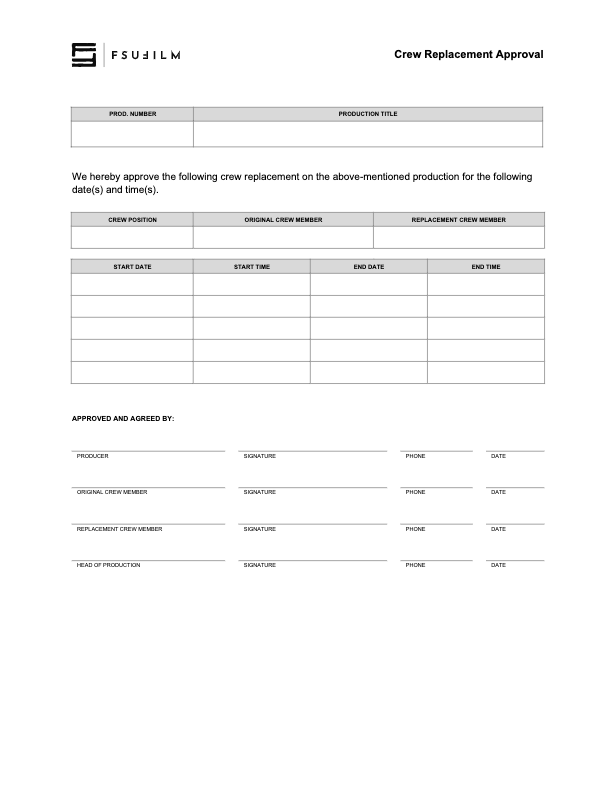
    This paperwork should be submitted when requesting that a crew member be replaced by another student. It requires the signatures of both the original crew member and their replacement, as well as the Producer and the Head of Production.

    If crew members are switching positions on a productions, a separate form should be submitted for each crew position.

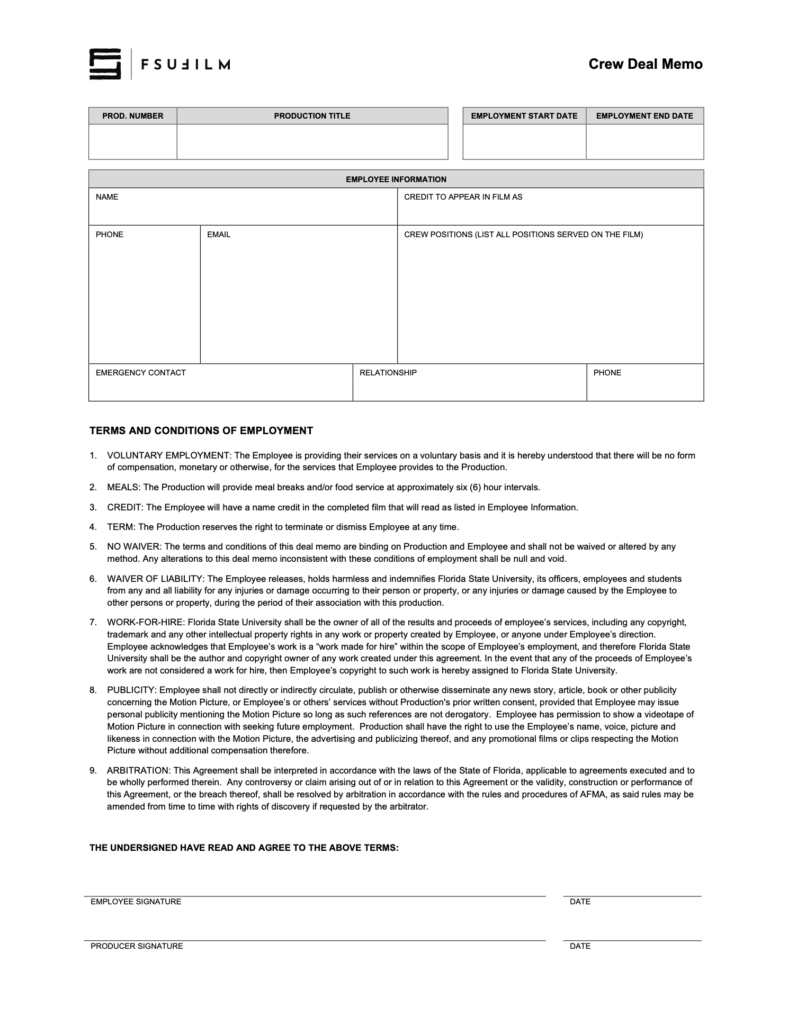
  • Crew Deal Memo

    Crew Deal Memo

    Overview

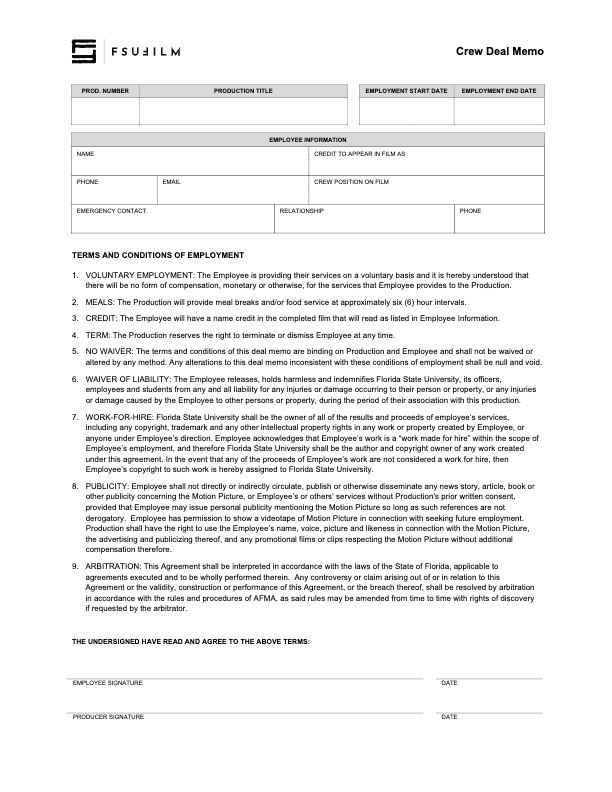
    A Crew Deal Memo documents the basic terms and expectations associated with an individual’s participation as a crew member on a production. This includes information related to responsibilities, dates of participation, screen credits, emergency contacts, and other production expectations.

    Clear crew documentation is important because productions depend on well-defined responsibilities and mutual understanding between collaborators. Maintaining formal agreements helps reduce confusion, supports accountability, and reinforces professional production practices related to staffing and crew organization.

    Instructions

    The Producer must ensure that all crew members complete a Crew Deal Memo at the start of the period of employment on the production. The deal memo outlines the terms and conditions of employment (which may not be modified) and defines the screen credit(s) in the finished film.

    During final delivery of paperwork, a single form is used to collect all the deal memos for assigned crew positions. To prepare for this, it is recommended that producers either:

    1. Organize digital scans of all the crew deal memos before starting work on the form submission, then drag each PDF into the appropriate field in the form; or
    2. Organize paper copies of all the crew deal memos, then take a photo of each memo using the camera feature in the appropriate field in the form.